What's the Average Home Insurance Cost in Alberta? A Homeowner's Guide
Trying to pin down the "average" home insurance cost in Alberta can feel like trying to hit a moving target. If you're looking for a ballpark figure, most homeowners in the province pay somewhere between **$1,500 and $2,500 a year**. That works out to roughly **$125 to $208 per month**.
But here's the crucial thing to understand: that's just a starting point. Think of it less as a fixed price and more as a general guideline. The final premium on your policy is a highly personalized number, reflecting everything unique about your home, your neighbourhood, and your specific needs. This guide is designed to empower you with the knowledge to understand your costs and find opportunities to save.
Why Are Home Insurance Costs in Alberta on the Rise?
If you feel like your home insurance bill is getting more expensive every year, you're not imagining things. Costs across Alberta have been climbing steadily, and the data backs it up.
The reasons for this are complex, but a huge piece of the puzzle is Alberta's unique and often harsh weather. From severe hailstorms in the summer to deep freezes in the winter, the risk of property damage is simply higher here. Insurers have to account for that increased risk, and unfortunately, that gets passed on to homeowners in the form of higher premiums. Understanding these trends is the first step toward proactively managing your insurance costs.
A Look at the Numbers: A Decade of Increasing Premiums
Just how much have costs gone up? The trend over the last decade is eye-opening and highlights why it's so important to be an informed consumer.
Back in 2015, the average Alberta homeowner was paying around **$736 per year** for their policy. Fast forward to today, and projections show that figure soaring to an estimated **$1,396 per year by 2025**. That's an increase of **$660**, or nearly a **90%** jump in just ten years.
A major driver behind this surge is the sheer cost of weather-related claims. In a recent year, Alberta saw a staggering **$4.1 billion in damages** from severe weather events—the highest of any province in Canada. When insurers are paying out that much in claims, premiums for everyone are bound to rise.
This chart puts that dramatic increase into perspective.
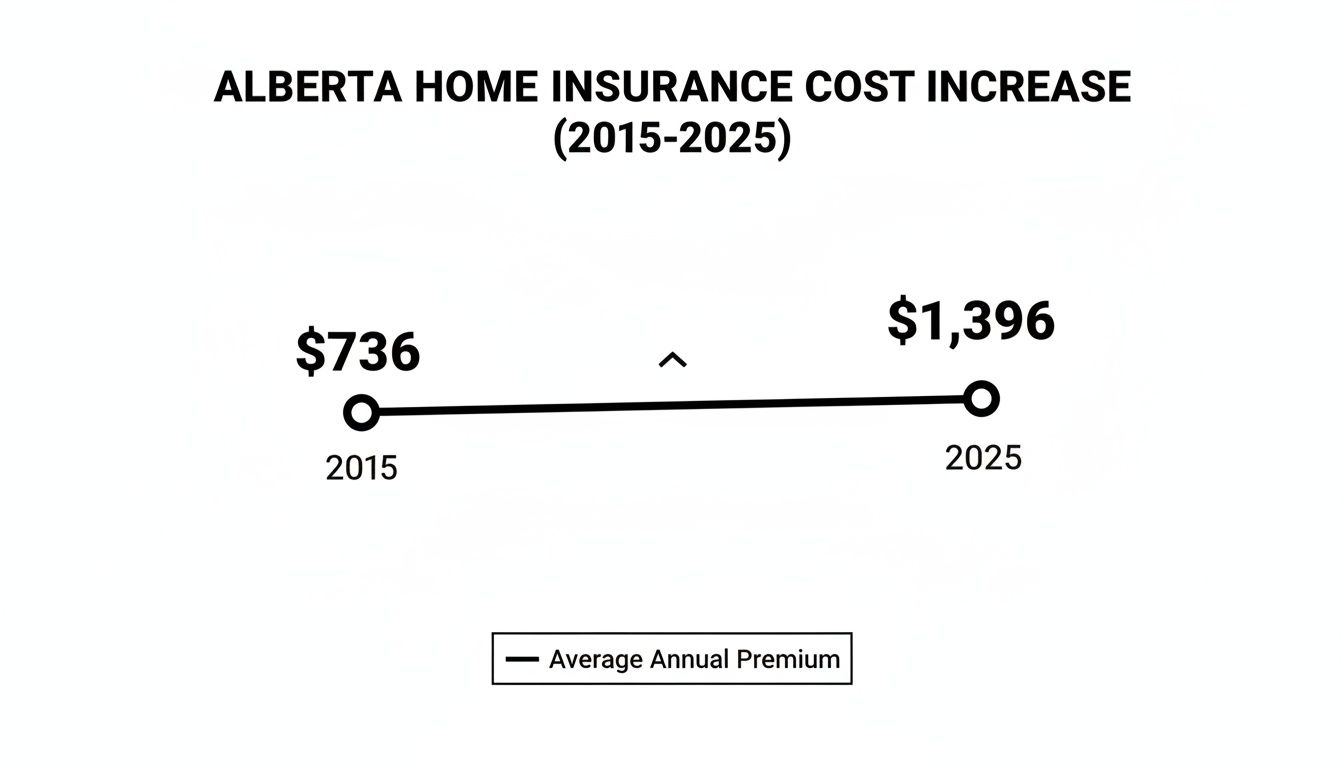
As the data shows, the cost of protecting a home in Alberta has nearly doubled. This makes it more critical than ever to be proactive about managing your policy and shopping around to find the best value.
> **Key Takeaway:** While the provincial "average" is a useful benchmark, it’s heavily skewed by big-picture factors like climate change and catastrophic events. Your personal premium will always be a mix of these broad trends and the specific details of your own home.
Knowing the average is one thing, but understanding what drives your specific rate is what truly empowers you. Once you know the factors at play, you can start looking for ways to secure a great policy that gives you solid protection without draining your bank account. The best way to do that is to explore your options for [comprehensive home insurance coverage](https://www.insuranceshope.ca/insurance/home) and compare quotes to ensure you're not overpaying.
Estimated Average Annual Home Insurance Premiums in Major Alberta Cities
Location plays a huge role in what you'll pay. Here’s a quick look at the typical premium ranges in some of Alberta’s major cities to help you see how your own costs compare to regional averages.
| City | Estimated Average Annual Premium Range | | :--- | :--- | | Calgary | $1,800 - $2,800 | | Edmonton | $1,600 - $2,600 | | Red Deer | $1,400 - $2,400 | | Lethbridge | $1,300 - $2,300 | | Grande Prairie | $1,500 - $2,500 |
As you can see, even within the same province, where you live can make a difference of hundreds of dollars a year. This is often tied to localized risks like hail frequency, local crime rates, and the age of the homes in the area.
What Actually Drives Your Home Insurance Premiums?
Ever look at your home insurance bill and wonder where that number comes from? It’s not arbitrary. Insurers use a sophisticated process to build a unique "risk recipe" for your specific property, where every single ingredient affects the final cost.
Getting a handle on this recipe is the first step to managing your insurance costs. Some ingredients you can't change, like your home's address. But plenty of others—like your security system or your claims history—are completely within your control. Let's pull back the curtain and look at the core factors that go into calculating the **average home insurance cost in Alberta**.
Location, Location, Risk-ation
It’s the oldest saying in real estate, and it’s just as true for insurance. Where you live is one of the biggest pieces of the premium puzzle. An insurer zooms in on your postal code to get a detailed picture of the local risks that could lead to a claim.
This is about more than just what city you’re in; it's about your specific neighbourhood.
* **Proximity to Fire Services:** How close are you to a fire hydrant or a fire hall? A fast response can be the difference between a small kitchen fire and a total loss, and that reduced risk means a lower premium for you. * **Crime Rates:** Insurers look at the local stats for things like break-ins and vandalism. If you’re in an area with higher crime, your rates will likely be higher to match the increased risk of theft. * **Flood and Wildfire Zones:** Alberta knows its share of natural disasters. If your home is in a designated overland flood plain or an area prone to wildfires, your premium will have to account for that heightened environmental risk.
Your Home's Unique Characteristics
Next, the insurance company puts your actual house under the microscope. The age, materials, and overall condition of your property tell them a lot about how it might hold up against potential disasters. It’s no surprise that a brand-new build with the latest safety features is seen as less risky than an older home with aging systems.
> A well-maintained home is more than just a source of pride—it's a signal to insurers that you are a responsible homeowner who actively works to minimize risk. This can directly translate into more favourable premiums.
Here are the key details they're looking at:
* **Age and Construction:** Older homes can have outdated electrical or plumbing systems, which are common sources of fire and water damage. The type of roof you have matters, too—a modern, fire-resistant one could even earn you a discount. * **Replacement Cost:** This is a big one. It’s not what you could sell your house for; it’s what it would cost to rebuild it from scratch at today’s prices for labour and materials. A higher replacement cost naturally leads to a higher premium. * **Heating, Plumbing, and Electrical Systems:** Insurers will want to know the age and type of your home’s core systems. An old oil tank or ancient knob-and-tube wiring is a major red flag, while a modern high-efficiency furnace and an updated electrical panel are seen as much lower risks. For a deeper dive, check out our guide on **[understanding home insurance coverage](https://www.insuranceshope.ca/blog/understanding-home-insurance-coverage)**. * **Protective Features:** Have you installed a monitored alarm system? Smoke detectors? A sump pump in the basement? These are proactive steps that reduce the odds of a claim, and insurers will often reward you for them with lower rates.
Your Personal Insurance Profile
Finally, your own history as a policyholder comes into play. Insurers are in the business of predicting future risk, and your past behaviour is one of their best indicators. A homeowner who has been claim-free for years is simply a safer bet than someone who files claims regularly.
Your personal profile includes:
* **Claims History:** A string of claims, even small ones, can signal a pattern of higher risk. This can lead to a significant increase in your premiums or, in some cases, make it harder to find coverage at all. * **Credit Score:** In Alberta, insurers are allowed to use a credit-based insurance score when setting rates. Don’t worry, it’s not the same score a bank uses for a loan. It's based on a proven statistical link showing that people who manage their finances responsibly also tend to have fewer insurance claims. * **Policy Choices:** The coverage limits you choose and the deductible you’re willing to pay have a direct impact on your price. Opting for a higher deductible means you agree to cover more of the cost yourself in a claim, which in turn lowers your premium.
By understanding these three core areas—your location, your property, and your personal profile—you can start to see where you have influence. This knowledge is your best tool for managing your premiums and making sure you get the best possible value for your policy.
How Alberta's Weather Shapes Your Insurance Rates
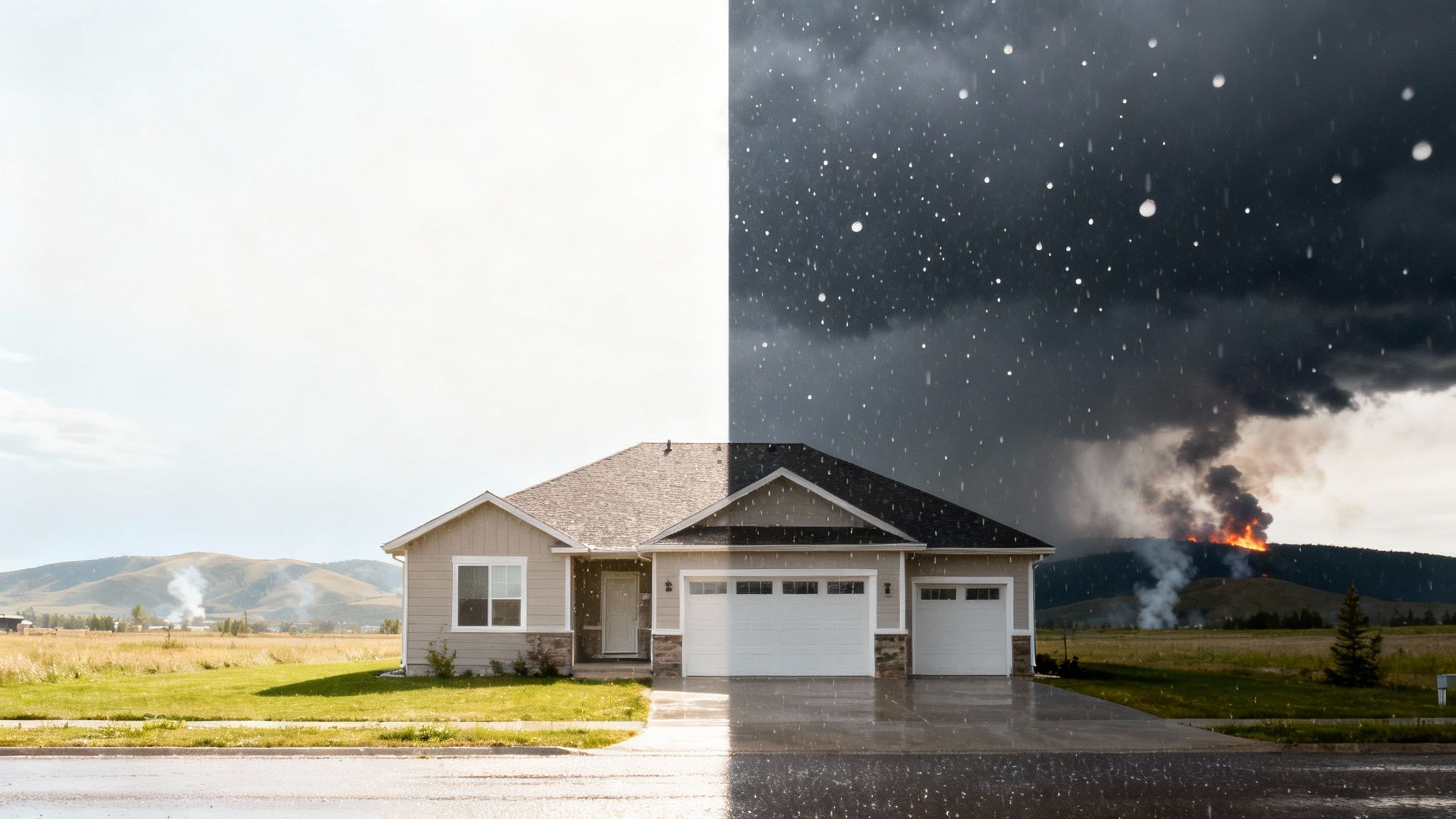
In Alberta, you can't talk about home insurance without talking about the weather. It's far more than small talk—the province’s wild, unpredictable climate is one of the biggest drivers behind the **average home insurance cost in Alberta**. From violent hailstorms that can shred a roof in minutes to the constant threats of wildfire and flash floods, these events create an enormous amount of financial risk.
Think of the insurance industry as a giant, shared pool of money. Every homeowner in the province pays into this pool through their premiums. When a massive hailstorm or wildfire tears through a community, insurers have to dip into that pool to pay out all the claims, which can easily soar into the billions.
After a disaster like that, the pool needs to be refilled. This means rates don't just go up for the people who actually filed a claim; they often adjust for everyone across Alberta. It’s a way to keep the whole system stable and ready for the next big event. In short, your premium reflects the shared risk of living in a place known for its severe weather.
The Ripple Effect of Catastrophic Weather
It’s a common myth that your rates only climb if you personally make a claim. The reality is, a single devastating storm in southern Alberta can cause premiums to nudge up for a homeowner hundreds of kilometres away in Edmonton. Insurers rely on historical data and complex models to forecast future losses, and Alberta's recent history is packed with expensive weather events.
This is why it's so important to understand the bigger picture. The financial fallout from these disasters is truly staggering. Just look at the pattern:
* **Hailstorms:** Alberta is notorious for hail, especially in the corridor between Calgary and Red Deer. One bad storm can damage thousands of roofs, windows, and cars, triggering a flood of claims all at once. * **Wildfires:** Events like the Fort McMurray wildfire were a harsh reminder of how destructive fires can be, causing some of the largest insured losses in Canadian history. * **Flooding:** Major floods, like the one that swamped Southern Alberta in 2013, exposed just how vulnerable many communities are to overland water damage.
These catastrophes have forced insurers to completely rethink the risk landscape in the province, and that re-evaluation translates directly into the higher premiums homeowners are seeing today. To get a better handle on this specific threat, check out our in-depth **[Alberta hailstorm insurance guide](https://www.insuranceshope.ca/blog/alberta-hailstorm-insurance-guide)**.
> **Key Insight:** When you pay your home insurance premium, you're not just protecting your own house. You're contributing to a provincial safety net designed to withstand the immense financial shock of widespread natural disasters.
How Alberta’s Rate Hikes Stack Up Nationally
The financial pressure from severe weather isn't just a local problem; it's putting Alberta at the top of the list for rising insurance costs across the country. Over a recent 12-month period, home insurance premiums in Alberta jumped by **9.07%**. That was the highest increase of any province and well above the national average of **5.28%**.
This sharp increase came after a year of massive insured losses nationwide, but Alberta's unique exposure to hail and wildfire risk justified the steeper adjustments. This cycle—huge insured losses followed by above-average premium hikes—is how the industry rebalances itself after a particularly costly year.
This financial reality is exactly why being proactive is so important for homeowners. While you can't control the weather, you can absolutely take steps to reduce its impact on your property. Making your home more resilient isn't just a smart move for your safety; it's a critical strategy for managing your long-term insurance costs in a province where the weather always seems to have the last word.
Smart Strategies to Lower Your Home Insurance Costs
Understanding what drives the **average home insurance cost in Alberta** is the first step, but taking action is how you gain control over your premiums. You can’t stop a hailstorm or change your postal code, but you *can* take practical steps to make your home a lower risk in the eyes of insurers.
This isn't about cutting corners on crucial coverage. It's about being a smarter, more proactive homeowner. With a few strategic upgrades and thoughtful policy adjustments, you can directly influence what you pay each year and find significant savings.
Make Protective Upgrades to Your Home
Insurers reward homeowners who actively reduce the chance of a claim. Think of it like a car—the more safety features you have, the lower the risk of an accident. The same idea applies to your house, and every upgrade you make can help chip away at your premium.
These investments don’t just protect your property; they show your insurance provider that you’re a responsible partner in managing risk.
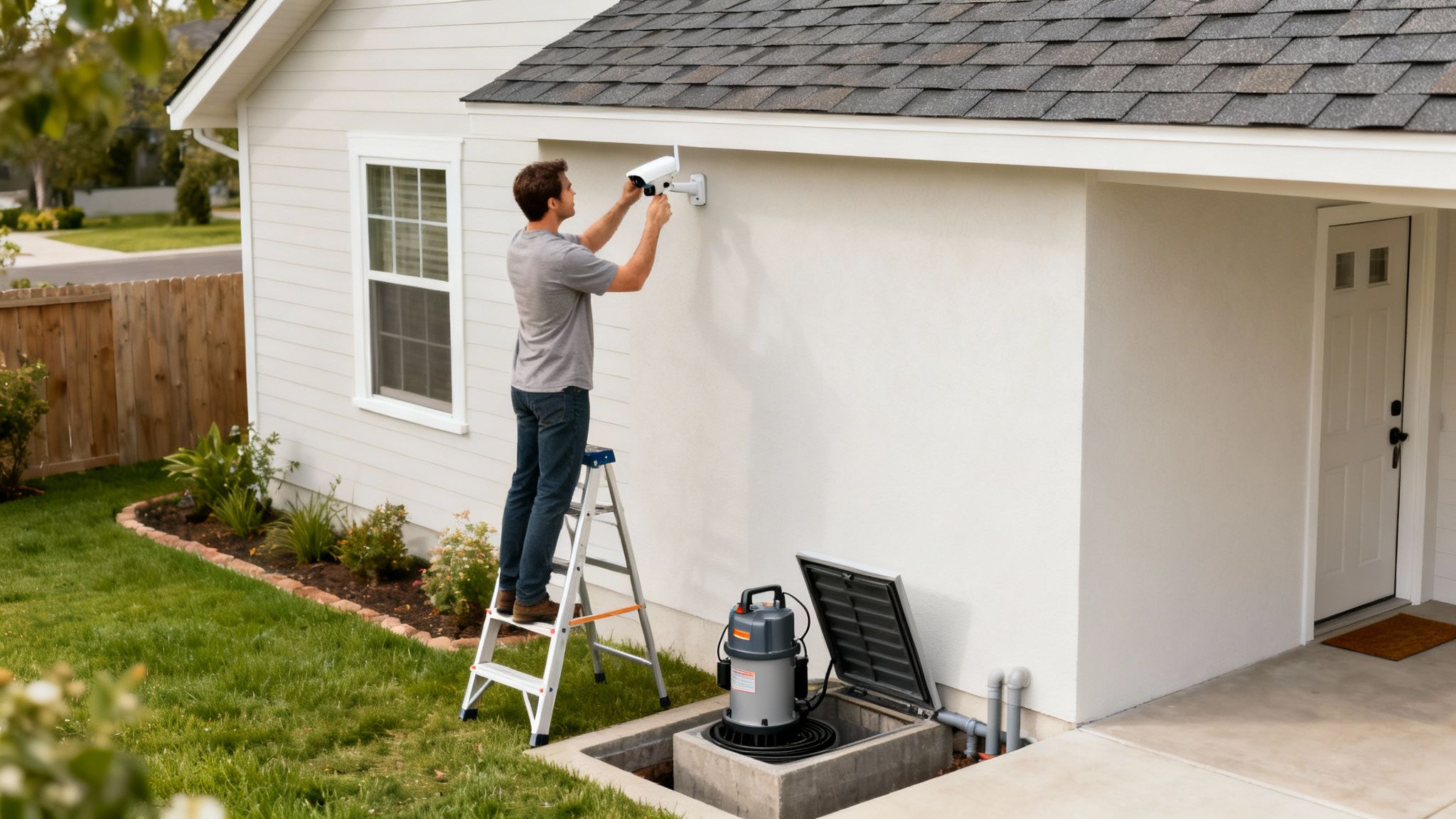
* **Install a Monitored Security System:** A system that automatically alerts the authorities during a break-in or fire is a huge deterrent. Insurers often offer discounts of **5% to 15%** for homes with professionally monitored alarms. * **Upgrade Your Roof with Resilient Materials:** In a province known for its hail, an impact-resistant roof is a game-changer. Using Class A fire-resistant or Class 4 impact-resistant shingles can lead to substantial discounts. * **Prevent Water Damage:** Water is one of the most common—and expensive—sources of home insurance claims. Installing a sump pump to prevent basement flooding or a backwater valve to stop sewer backups are key preventative moves that insurers love to see.
Adjust Your Policy for Immediate Savings
Beyond physical upgrades, you can find savings right inside your policy documents. A few key adjustments can lower your monthly payments without sacrificing the core protection your family needs. It’s all about finding the right balance between cost and coverage.
These are some of the fastest and most effective ways to see a change in your premium.
> **Key Takeaway:** The single most impactful policy change you can make is often raising your deductible. A higher deductible means you agree to pay more out-of-pocket if you file a claim, which in turn lowers your premium. For instance, increasing your deductible from **$1,000 to $2,500** can often reduce your annual premium by **10% or more**.
Before you make a change, just be sure you can comfortably cover the higher deductible amount in an emergency.
Unlock Discounts Through Bundling and Loyalty
Insurance companies value your business and are often willing to offer discounts to keep it. One of the easiest wins is to place all your insurance policies with a single provider. This not only simplifies your life but can also lead to serious savings.
For example, bundling your home and auto insurance is a classic way to get a discount. Many providers offer a multi-policy discount that can save you **up to 20%** on your total insurance bill. You can learn more about the benefits of **[multiple policy discounts in Alberta insurance](https://www.insuranceshope.ca/blog/multiple-policy-discounts-alberta-insurance)** to see if it makes sense for you.
On top of that, many insurers reward loyalty. If you've been with the same company for several years and have a clean claims history, don't be afraid to ask if you qualify for a loyalty discount. Sometimes, the best deals are the ones you just have to ask for.
Finding the Best Value by Comparing Insurance Quotes
Letting your home insurance policy roll over and renew automatically each year is one of the easiest—and most expensive—mistakes an Alberta homeowner can make. The **average home insurance cost in Alberta** is always on the move, so shopping around isn’t just a good idea; it’s an essential part of managing your finances wisely.
Think of it like getting a second opinion from a specialist. You wouldn't agree to a major medical procedure without exploring your options, and the same thinking should apply to protecting your biggest asset. Every insurance company has its own way of calculating risk, which means the insurer who gave you the best deal last year might not be your most competitive option today.
Comparing quotes puts you back in the driver's seat, empowering you to get the right protection at the best possible price.
Look Beyond the Bottom-Line Price
When you have a few quotes in front of you, it’s tempting to gravitate toward the lowest number. But hold on—the cheapest premium doesn’t always mean you're getting the best value. Two policies can look similar on the surface but offer wildly different levels of protection, potentially leaving you exposed if you’re not paying attention.
A great policy strikes a perfect balance between what you pay and what you get. To find that sweet spot, you need to dig into the details.
* **Check Your Coverage Limits:** Is the dwelling coverage high enough to completely rebuild your home from the ground up at *today's* construction prices? Don't confuse this with market value. And what about your personal belongings and liability? Make sure those limits are realistic for your situation. * **Understand What's Left Out:** Pay close attention to the exclusions. Most standard policies won't cover things like overland flooding or sewer backup unless you specifically add them on. A cheaper quote might be cheap for a reason—it could be missing this essential protection. * **Review the Deductible:** That tempting low premium might be hiding a sky-high deductible. Before you sign, ask yourself if you're comfortable paying that amount out-of-pocket if you need to make a claim.
Evaluate the Insurer’s Reputation
The price of your policy is irrelevant if the company is impossible to deal with when you actually need help. An insurer's track record for customer service and how they handle claims is a massive part of the value equation.
Before you commit, do a little homework. Check out online reviews, look into their financial strength rating, and ask your broker what their experience has been with the company's claims department. A smooth, fair, and fast claims process is worth paying a little extra for. To see how this plays out in a major city, you can learn more about finding the right **[home insurance in Calgary](https://www.insuranceshope.ca/calgary-home-insurance)**, where local risks make your choice of provider even more critical.
Your Checklist for Getting an Accurate Quote
To get quotes you can actually compare side-by-side, you'll need to have some information handy. A little prep work makes the whole process smoother and ensures you’re comparing apples to apples.
> Having your details organized beforehand is the key to an efficient and effective comparison shopping experience. It allows a broker to quickly pinpoint the best options from multiple insurers, saving you both time and money.
Gather these details before you start:
* **Personal Information:** Your name, address, and date of birth. * **Property Details:** The year your home was built, its square footage, and the main construction material (e.g., brick, wood frame). * **System Updates:** The age and type of your roof, furnace, electrical panel, and plumbing. * **Protective Features:** Any info on security systems, monitored smoke detectors, sump pumps, or backwater valves. * **Insurance History:** Details of any home insurance claims you've made in the last five to ten years.
With this list checked off, you're all set to find a policy that delivers real value and genuine peace of mind.
Common Questions About Alberta Home Insurance
To wrap things up, let's tackle a few of the most common questions homeowners ask. Getting clear answers to these key details can make a big difference in how you approach your insurance and help you feel confident in your decisions.
Understanding these points is the key to mastering the **average home insurance cost in Alberta** and making sure you've got the right protection in place.
Does My Credit Score Affect My Home Insurance Rate in Alberta?
Yes, it can. In Alberta, insurers are permitted to look at your credit score as one of many factors when they calculate your premium. From an insurer's perspective, a strong credit history can be an indicator of financial responsibility, which may translate to a lower insurance risk and, in turn, a lower premium.
However, it’s important to remember that it's just one piece of a much larger puzzle. It’s always weighed alongside more critical factors like your past claims, where your home is located, what it’s made of, and the condition of its roof, plumbing, and electrical systems.
Will Making a Small Claim on My Home Insurance Increase My Premium?
It very well could. Filing even a small claim can have a ripple effect on your premium when it’s time to renew. Most insurance companies offer a valuable "claims-free" discount, and putting in a claim—no matter the size—could cause you to lose that discount for several years.
Here’s a practical way to think about it: if the repair bill is only a little more than your deductible, you might save money in the long run by paying for it yourself. It’s always smart to have a quick chat with your broker *before* you file a small claim. They can help you understand the trade-off and figure out what makes the most financial sense.
> A good rule of thumb is to save your insurance for the big, unexpected disasters. Using it for minor issues can end up costing you more over time through lost discounts and higher rates at renewal.
Is Overland Flood Coverage Automatically Included in My Policy?
Almost never. In Alberta, overland flood coverage is not a standard part of a basic home insurance policy. It is almost always an optional add-on, what the industry calls an endorsement.
Given the real risk of flooding in many parts of the province—whether from a fast spring thaw or a sudden summer downpour—this is a massive coverage gap you need to be aware of. You absolutely must review your policy documents and talk to your broker to see if you have this protection or if it's something you should add. Don't wait until it's too late to find out.
Why Is Home Insurance So Much More Expensive in Certain Alberta Cities?
It all comes down to localized risk. Alberta's landscape is incredibly diverse, and so are its risks. For instance, Calgary is known as the hailstorm capital of Canada, with severe storms causing billions in insured damages over the years. That history of frequent, expensive claims drives up the base cost of insurance for everyone in that area.
Similarly, communities like Fort McMurray are seen as having a much higher risk of wildfire, which also pushes premiums up. Insurers set their prices based on a massive amount of data about the likelihood and potential cost of claims in a very specific geographic area. That’s why your postal code has such a huge impact on what you pay.
Once you understand how these factors fit together, you can make smarter decisions about your own policy and find that sweet spot between great protection and a fair price.
--- Ready to stop guessing and start saving? The best way to find out how these factors impact your premium is to get a personalized quote. The licensed professionals in the **InsuranceShope** network can help. They’ll do the heavy lifting for you—shopping multiple top insurers, explaining your options in plain English, and finding a policy that fits your home and your budget.
Get your no-obligation quote by visiting [https://www.insuranceshope.ca](https://www.insuranceshope.ca) today.