A Landlord's Guide to Insurance for a Rental Property
If you've just invested in a rental property, congratulations! That's a huge financial milestone. But here’s something many new landlords don't realize: your standard homeowner's insurance policy won't cut it. To truly protect that investment, you need specialized **insurance for a rental property**, which most people in the industry simply call landlord insurance. It's a non-negotiable part of the business, covering the unique risks that come with having tenants—things like property damage, liability claims, and even lost rent, which your personal home policy was never designed to handle.
This expert guide will walk you through everything you need to know about landlord insurance, empowering you to make confident decisions, compare quotes like a pro, and find the best value for your coverage.
Why Your Rental Property Needs Specialized Insurance

Here's an easy way to think about it. Your personal car insurance is perfect for your daily commute and weekend trips. But if you started using that car to run a delivery service, you'd need commercial auto insurance, right? The vehicle is the same, but the risk is completely different.
The exact same logic applies to your property. The moment you hand over the keys to a tenant, your home transforms into a business asset. This introduces a whole new world of liabilities that a standard [homeowner's policy](https://www.insuranceshope.ca/insurance/home) simply isn't built for.
Understanding the Financial Stakes
Getting this wrong can have devastating financial consequences. In today's volatile market, landlords are already feeling the pinch from rising costs. Just look at what's happening in other challenging insurance markets, like California, where property owners are facing staggering premium hikes due to wildfire risks and complex regulations. One landlord in the Bay Area watched their annual premium for a multi-unit building jump from **$2,600** to over **$6,500** in less than two years. That’s a shocking **150% increase**, and it highlights a crisis that could easily happen anywhere.
> Your rental property is more than just a building; it's a source of income and a long-term investment. Protecting it with the right insurance policy is the cornerstone of a successful and sustainable rental business.
What This Guide Covers
Think of this guide as your complete roadmap to rental property insurance. We’re going to dig into the key topics to give you the full picture:
* **Core Coverages:** We'll look at what your policy actually protects, from the physical structure of the building to your personal liability. * **Cost Factors:** You'll learn about the key variables that insurers use to calculate your premiums. * **Policy Add-Ons:** We’ll explore how you can customize your coverage for specific Alberta risks like overland flooding or sewer backup. * **Saving Strategies:** Get actionable tips for lowering your insurance costs without leaving yourself exposed.
While our focus is squarely on landlord insurance, having a good grasp of standard home insurance is always helpful. For a refresher, you can check out our guide on essential home insurance coverage to see how the two compare.
What Your Landlord Insurance Policy Actually Covers

Think of landlord insurance as a three-legged stool. Each leg is a core type of coverage, and if one is missing, the whole thing comes crashing down—along with your financial stability. Let's break down these essential pillars to see how they come together to form your financial safety net.
The first and most obvious leg is **property damage coverage**. This is the part of the policy everyone pictures: it's there to repair or rebuild the physical structure of your rental unit after a disaster like a fire, hailstorm, or major vandalism.
This protection also covers other structures on the lot that aren't attached to the main building, like a detached garage, a fence, or a shed. It’s the absolute foundation of your policy, ensuring your most valuable physical asset can be put back together without you having to drain your life savings.
Protecting Yourself from Legal Action
The second, and arguably just as critical, leg of the stool is **liability coverage**. This part of the policy protects *you* and your personal assets if a tenant or their guest gets hurt on your property and you're found legally responsible.
For instance, if a visitor slips on an icy walkway you forgot to salt or trips over a loose floorboard, this coverage steps in. It helps pay for their medical bills and, crucially, covers your legal defence costs if they decide to sue. In a world where a simple accident can lead to a financially devastating lawsuit, robust liability protection is non-negotiable.
Securing Your Cash Flow
The final, and often overlooked, leg is **loss of rental income coverage**. This is a lifesaver for maintaining your business's financial health when disaster strikes. If a covered event, like a major fire or flood, forces your tenants out and makes the property uninhabitable, this coverage replaces the rent you would have collected while repairs are underway.
> This protection ensures that a disaster doesn't just damage your building—it stops it from crippling your income stream. It provides the cash flow you need to keep paying the mortgage, property taxes, and other bills, turning a potential financial catastrophe into a manageable problem.
Let's walk through a real-world scenario. Imagine a pipe bursts in your rental, causing significant water damage. Here’s how these coverages would work together:
1. **Property Damage:** Your policy pays to tear out the ruined drywall and flooring, hire a restoration company to dry everything out, and rebuild the damaged areas. 2. **Liability:** If the water leak damaged your tenant's expensive electronics and they hold you responsible for failing to maintain the plumbing, your liability coverage would handle their claim and any legal costs. 3. **Loss of Rental Income:** While the unit is a construction zone for two months, this coverage pays you the monthly rent you're losing, so you can still meet your financial obligations without dipping into your savings.
Understanding how these core protections function is the first step in building a strong defensive strategy for your investment. While landlord insurance is distinct, it shares some concepts with standard policies; our detailed guide on [understanding home insurance coverage](https://www.insuranceshope.ca/blog/understanding-home-insurance-coverage) can provide additional context.
Key Factors That Influence Your Insurance Premiums
Ever wonder what goes on behind the curtain when an insurer calculates your premium? It’s not a mystery box—it’s a detailed risk assessment. Getting a handle on what they're looking at is the first step toward finding ways to lower your costs.
Insurers are essentially trying to predict the future likelihood of a claim on your property. To do this, they analyze a mix of factors tied to the building itself, its location, and your own history as a landlord. The more risk they see, the higher your premium will be.
Think of it like a credit score, but for your property. Just like your financial habits shape your personal score, different elements of your rental property build its risk profile. Let's break down the most significant ones.
Property Characteristics and Condition
The physical details of your rental play a massive role in what you'll pay for insurance. Insurers look very closely at the building's age, the materials it's made of, and the condition of its core systems.
* **Age and Construction:** An older building with original, un-updated wiring or plumbing is seen as a much higher risk for fire or water damage compared to a new build. A solid brick building, for example, is more fire-resistant than a wood-frame one and will often earn you a lower rate. * **Roof Condition:** The age and material of your roof are critical. A brand new, professionally installed roof can handle harsh weather far better than one that's 20 years old, which seriously cuts down the risk of leaks and water damage. * **Systems Integrity:** Your electrical, plumbing, and heating systems are under the microscope. Outdated knob-and-tube wiring or old galvanized steel pipes are major red flags that can lead to sky-high rates or even a flat-out denial of coverage.
Location and Environmental Risks
Where your property is located is just as important as what it's made of. A building in a neighbourhood with a low crime rate and close to a fire station is viewed much more favourably than one in a high-risk area.
> Understanding regional risks is crucial. Insurers have to account for local trends, like the increasing frequency of severe weather events, which directly impacts what it costs to insure properties in certain areas.
Recent trends show just how much outside factors can drive up costs. For instance, rental-specific dwelling fire policies saw premiums jump from **$150 to $230** per **$100,000** of covered value between 2018 and 2021. In high-risk areas, the situation can be even more dramatic.
Your Profile as a Landlord
Finally, insurers will look at your personal track record. Your claims history is one of the strongest predictors of future risk. If you've filed several claims in the past few years, insurers will likely see you as higher risk and charge a higher premium.
For Albertans, it’s key to understand the specific pressures in our province. You can learn more by exploring our guide on **[why insurance rates are high in Alberta](https://www.insuranceshope.ca/blog/why-insurance-rates-high-alberta)**. By proactively managing these factors—from keeping your property in top shape to maintaining a clean claims record—you can directly influence your premiums and lock in better **insurance for a rental property**.
Customizing Your Policy With Essential Add-Ons

A standard landlord policy gives you a solid foundation, but it’s designed to cover the most common risks—not every possible scenario that could hit your investment property. To truly protect your asset, you’ll almost always need to customize your **insurance for a rental property** with endorsements, which are simply add-ons that target specific threats.
Think of it like buying a car. The base model gets you on the road, but the endorsements are the winter tires, all-wheel drive, and rust protection you add to handle Alberta's unique conditions.
These add-ons are crucial because many of the biggest potential disasters are specifically excluded from a base policy. Insurers separate them so that you only pay for the protection you actually need, which helps keep premiums manageable for everyone.
High-Priority Water and Earth Damage Add-Ons
Water is one of the biggest enemies of any property owner, and a basic policy won't touch certain kinds of water damage. That's why two of the most critical endorsements for Alberta landlords are sewer backup and overland water coverage.
* **Sewer Backup:** This covers the nightmare scenario where a municipal sewer line backs up or your own sump pump fails, sending raw sewage flooding into your basement. The cleanup and repair from this kind of disaster can easily run into the tens of thousands of dollars. * **Overland Water:** This protects your property from damage caused by fresh water flooding in from outside—think overflowing rivers, melting snowpack, or torrential rain that pools and seeps in. Given Alberta’s history with major floods, this is a must-have for many properties. To dig deeper into this risk, check out our guide on [overland flood insurance for Alberta homeowners](https://www.insuranceshope.ca/blog/overland-flood-insurance-alberta-homeowners). * **Earthquake:** While it might seem like a distant risk, seismic activity does happen in Alberta. A standard policy won't cover damage from ground tremors, so this endorsement is necessary to protect your building's structure.
Protecting Against Vacancy and Other Risks
Beyond acts of nature, other specialized add-ons address the unique situations landlords find themselves in. **Vandalism coverage** is a big one, especially if your property is likely to sit empty between tenants for any length of time.
> A lot of standard policies will severely limit—or flat-out deny—coverage for vandalism if a property has been vacant for more than **30 days**. This endorsement makes sure you’re still protected from malicious damage like broken windows or graffiti during those turnover periods.
You can also purchase **specialized rental income protection**. While your base policy usually covers lost rent after a physical event like a fire, this add-on can offer a lifeline if a tenant defaults on their rent or you have to go through a lengthy eviction process. It's all about assessing your property's specific vulnerabilities and choosing the add-ons that give you real value and, most importantly, peace of mind.
Common Policy Exclusions You Need to Know
Knowing what your landlord policy covers is just one half of the equation. Understanding what it *doesn't* cover is arguably even more important—it's what can save you from a nasty financial shock down the road.
The key thing to remember is that insurance is designed to protect you from sudden, unexpected events. It’s not there to pay for routine upkeep or predictable breakdowns.
Think of your policy as an emergency response team ready for a sudden fire or a major hailstorm. It's not a maintenance crew you can call to fix a slow leak or replace an aging appliance. Insurers expect landlords to handle the gradual costs of owning and maintaining a property.
Maintenance vs. Insurable Events
This is where most of the common exclusions live. Because insurers expect you to keep your property in good working order, they won’t pay for issues that could have been prevented with proper maintenance.
Your policy will almost certainly exclude:
* **Wear and Tear:** This is the predictable stuff—aging shingles that finally give out, worn-out carpeting, or a furnace that reaches the end of its life. These are considered normal costs of doing business as a landlord, not a sudden loss. * **Mould and Rot:** If mould slowly develops over time because of a persistent drip or poor ventilation, the cleanup costs typically won't be covered. It's viewed as a failure of maintenance, not an accident. * **Pest Infestations:** Damage from termites, rodents, or other critters is considered a preventable problem that falls squarely under your responsibility as the property manager.
Your Tenant's Stuff Isn't Your Responsibility
This is a big one. **Your landlord policy will never cover your tenant's personal belongings**. It's a critical distinction and reinforces why you need to make sure your tenants have their own protection.
> Making renter's insurance mandatory in your lease is a fundamental risk management strategy. It protects their property and gives them liability coverage—which, in turn, protects you from potential lawsuits and helps keep your own insurance risks in check.
This is especially vital in certain areas. For example, some recent analyses in high-risk markets show renter insurance uptake can be as low as a dismal **14%**, a figure well below national averages. That gap massively amplifies a landlord's risk exposure. Read more about [these insurance market trends](https://www.milliman.com/en/insight/california-homeowners-insurance-los-angeles-wildfires).
When you require tenants to have their own insurance, you’re not just offloading risk; you're building a stronger financial safety net for everyone involved.
Actionable Steps to Lower Your Insurance Costs
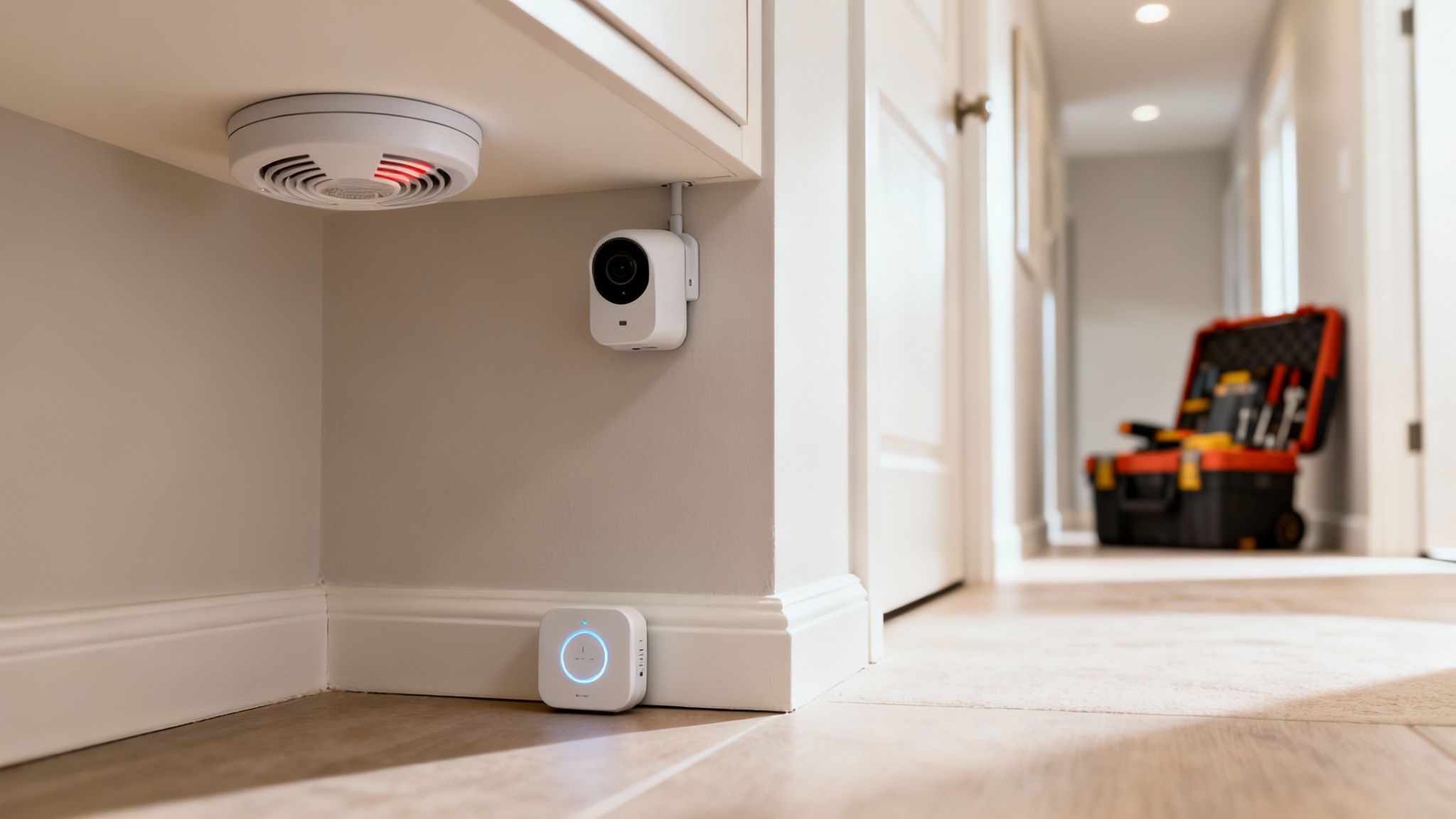
Getting solid **insurance for a rental property** is a must, but that doesn't mean you have to overpay. With a few smart moves, you can lower your premiums—often while making your property safer and more appealing to insurers at the same time.
Think of it like a good student discount. Insurers reward landlords who take real steps to prevent claims before they ever happen. This comes down to investing in safety, staying on top of maintenance, and making smart choices with your policy.
Fortify Your Property Against Common Risks
One of the most effective ways to lower your costs is to install devices that reduce common risks like fire, break-ins, and water damage. When insurers see these upgrades, they see a landlord who is serious about protecting their asset, which can lead to significant savings.
Consider these high-impact additions:
* **Monitored Security Systems:** An alarm system that automatically contacts the police or fire department is a huge deterrent for thieves and can earn you a significant discount. * **Smoke and Carbon Monoxide Detectors:** Forget the old battery-powered units. Hardwired, interconnected detectors offer far better protection and are highly regarded by insurance companies. * **Automatic Water Shut-Off Devices:** These brilliant little gadgets detect a leak and immediately shut off the main water supply, preventing the catastrophic damage that makes water one of the most common—and expensive—claims.
> By investing in modern safety tech, you’re not just crossing your fingers and hoping for the best; you're actively preventing disaster. This is exactly the kind of proactive approach insurers love to see, and they’ll often reward it with lower premiums.
Leverage Smart Policy Management
Beyond physical upgrades to the property, you can find real savings just by being strategic with how you manage your insurance policies. A little bit of admin work can go a long way.
A classic, effective tactic is to **bundle your policies**. If you have insurance for your own home, your vehicles, or even other rental properties, putting them all under one roof with a single insurer can unlock some serious multi-policy discounts. It simplifies your life and can lead to impressive savings. You can learn more about how to make this work for you in our guide to [multiple policy discounts in Alberta insurance](https://www.insuranceshope.ca/blog/multiple-policy-discounts-alberta-insurance).
Another powerful tool is your **deductible**. This is the amount you agree to pay out-of-pocket on a claim before the insurance company steps in. By choosing a higher deductible—for instance, bumping it up from **$1,000 to $2,500**—you're telling your insurer that you won't be filing claims for every minor issue. This lowers their risk, and in return, they’ll lower your annual premium. It's a true win-win that can save you money year after year.
Your Top Landlord Insurance Questions, Answered
Getting into the nitty-gritty of rental property insurance can spark a lot of questions. To make sure you feel confident about your coverage, we’ve tackled some of the most common queries landlords have with clear, straightforward answers.
This is all about clearing up any last-minute confusion and giving you the quick insights you need.
Do I Need Landlord Insurance If I Only Rent Out a Room?
Yes, you absolutely do. Your standard home insurance policy is built for a home you live in yourself, and it simply isn't designed to handle the unique liability risks that pop up the moment you have a paying tenant—even if they're just in one room.
Renting a room is a business activity, plain and simple. You need to let your insurer know. They’ll likely suggest either adding a special endorsement to your current policy or switching you to a proper landlord policy to make sure you're fully covered for any tenant-related incidents.
> Think of it this way: the moment you accept rent, your entire risk profile changes in the eyes of an insurer. If you don't tell them and something goes wrong, they could deny your claim, leaving you to foot the entire bill.
Is It Legal to Require Tenants to Have Renters Insurance?
Yes, in most places, it is completely legal—and it's a smart move. Adding a clause to your lease agreement that requires tenants to carry their own renters insurance is a standard play for any savvy landlord.
This requirement does two things. First, it protects your tenants' personal belongings and gives them their own liability coverage. Second, it reduces the chances of them suing you if an accident happens and can even help cover your policy deductible if they are at fault for damage to your property.
How Does a Vacant Property Affect My Landlord Insurance?
An empty property is a magnet for trouble. The risk of vandalism, break-ins, or an undetected water leak skyrockets. Because of this, nearly all landlord policies include a vacancy clause that can limit or even void your coverage if the property sits empty for a specific time, often **30 consecutive days**.
If your rental is going to be vacant, you must tell your insurer right away. They'll walk you through your options, which usually involve buying a "vacancy permit" or a specialized policy to keep your investment protected while you find a new tenant.
--- Ready to find the right protection for your investment without all the hassle? The experts at **InsuranceShope** connect you with local Alberta brokers who will shop the market to find you competitive quotes on insurance for a rental property. [Get your free, no-obligation quote today and see how much you can save](https://www.insuranceshope.ca).