Renew Auto Insurance in Alberta The Smart Way
To renew your auto insurance effectively, you need to review your current policy, explore what other providers are offering, and secure your new coverage before your existing policy expires. It’s a straightforward process, but it’s a crucial one that prevents a lapse in coverage—a mistake that can lead to **serious financial and legal headaches**, especially here in Alberta. This guide will empower you to navigate your renewal with confidence, ensuring you have the best protection at the most competitive price.
The High Cost of Missing Your Renewal Date
Letting your car insurance renewal date slide is far more than a simple missed deadline; it's a significant financial gamble. A lapse in coverage, even for a single day, means you are driving illegally in Alberta. The consequences can be swift and severe, turning a minor administrative oversight into a major crisis.
Imagine a small fender-bender in a parking lot the day after your policy expires. Without coverage, you are personally liable for *all* damages. That includes not only the repairs to the other vehicle, which can easily run into thousands of dollars, but also any potential injury claims.
The Domino Effect of a Coverage Gap
A gap in your insurance coverage triggers a damaging domino effect. The immediate problems are clear, but the long-term consequences can be even more severe.
* **Hefty Fines and Penalties:** If you're caught driving without insurance in Alberta, you’re looking at fines starting at **$2,875** for a first offence. You could also face a licence suspension. * **Vehicle Impoundment:** Police have the authority to seize and impound your vehicle on the spot if you're caught driving without valid insurance. * **Liability for Damages:** You become personally responsible for every cost resulting from an at-fault accident, from vehicle repairs to medical bills and legal fees. It’s important to understand how our system works; you can learn more about no-fault insurance explained in Alberta to see just how complex these situations can become.
Beyond the immediate legal issues, a coverage gap labels you as a high-risk driver in the eyes of insurers. That label sticks with you, making it much more difficult and expensive to secure a new policy.
> A lapse in your insurance history, no matter how short, signals instability to providers. They will view you as less reliable, and your future premiums will reflect that increased risk.
This high-risk designation can mean paying significantly higher premiums for years, costing you far more than a timely renewal ever would. The simple act of missing a date can effectively erase years of a good driving record in an insurer's eyes.
Ultimately, the goal is to **renew auto insurance** on time, not just to comply with the law, but to protect your financial future. Managing your renewal proactively isn't just another item on your to-do list—it's a critical financial safeguard.
Navigating Your Renewal Package and Timeline
Your renewal package from your insurance company typically arrives about **30 to 45 days** before your policy expires. It’s tempting to just glance at the new premium and set it aside, but this is a missed opportunity. Taking a few minutes to carefully review these documents can save you a surprising amount of money and prevent future headaches.
Think of that package as your annual insurance check-up. Your insurer isn't just sending a bill; they're providing a complete overview of your protection for the next year. It's your responsibility to ensure it still meets your needs and offers the best value.
Decoding Your Renewal Documents
So, what should you look for in that paperwork? The most important document is the **declarations page**. This is the one-page summary of your entire policy: your coverages, limits, deductibles, and a list of all covered vehicles and drivers. You should also look for a "Notice of Policy Changes" document. Insurers often include details here about new terms or exclusions that could catch you by surprise if you’re not paying attention.
Of course, the first thing everyone notices is a price increase. If your premium has gone up, it’s usually for one of these reasons:
* **Your Driving Record:** Any recent speeding tickets or at-fault accidents will almost certainly lead to higher rates. * **Industry-Wide Trends:** Sometimes, rates increase across the board in Alberta due to factors like a rise in auto theft or higher repair costs for modern vehicles. * **Changes in Your Life:** Did you move to a new neighbourhood, change your commute, or add a new car to the policy? These details alter your risk profile, which directly impacts your premium.
As you plan, it's a good idea to map out your actions. A simple timeline can keep you on track and prevent any last-minute scrambling.
Your Auto Insurance Renewal Timeline
| Timeline | Your Action Item | Why It Matters | | :--- | :--- | :--- | | **45-60 Days Before** | Review your current policy. Note any life changes (new car, new address, new driver). | This prepares you to have a productive conversation with your broker and allows you to start comparing quotes effectively. | | **30-45 Days Before** | Your renewal package arrives. Carefully read the declarations page and any notices of change. | This is your first look at your new premium and any adjustments to your coverage for the upcoming year. | | **20-30 Days Before** | This is the prime time to shop around. Get quotes from different insurers to compare your renewal offer. | You'll have enough time to compare options apples-to-apples and won't feel pressured into a hasty decision. | | **7-14 Days Before** | Make your final decision. Either confirm your renewal with your current provider or switch to a new one. | This ensures all paperwork is processed and your new proof of insurance is on its way before your old policy expires. | | **Renewal Day** | Confirm your new policy is active. Place your new insurance card (pink slip) in your vehicle. | Driving without proof of valid insurance can lead to hefty fines, even if you are covered. |
Following a schedule like this transforms renewal from a chore into a strategic financial decision, ensuring you have the best possible coverage without any gaps.
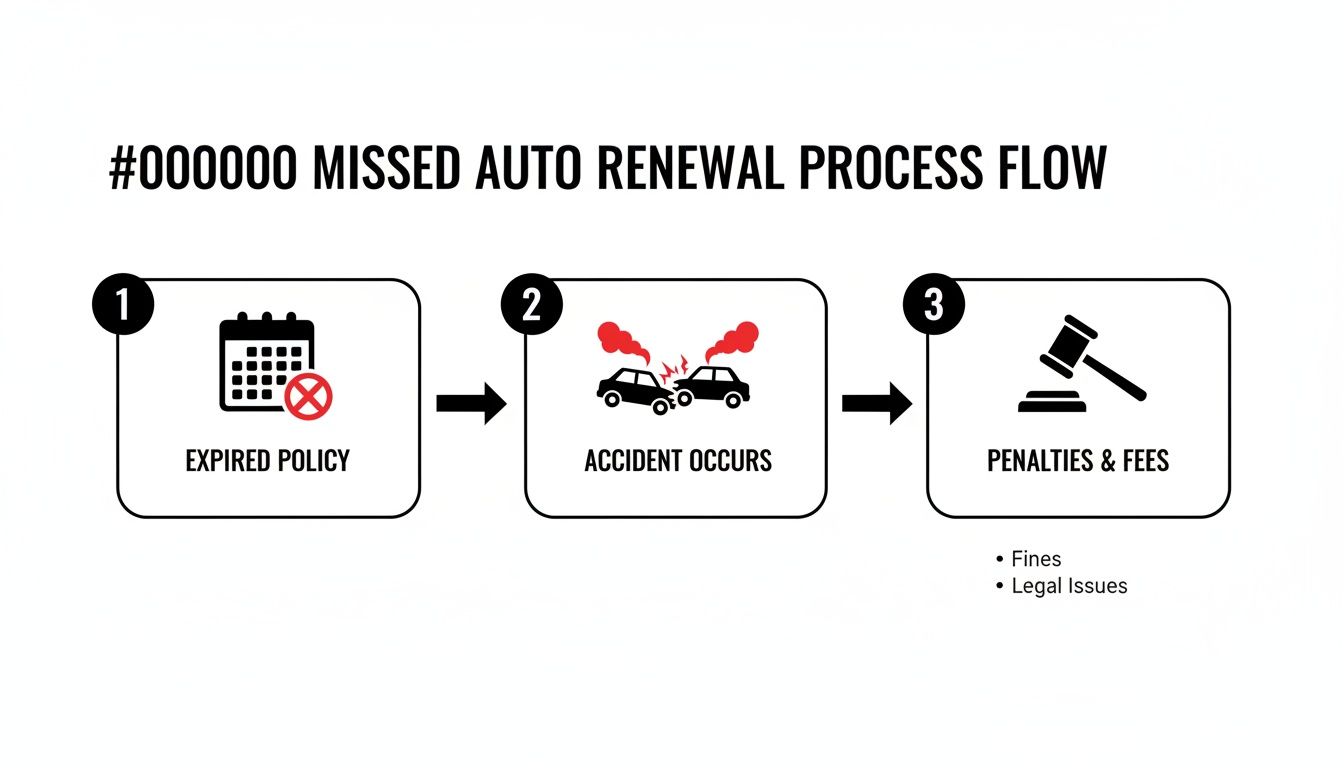
As you can see, a simple oversight can spiral into a major financial and legal problem. That's why acting on your renewal notice as soon as it arrives is so important.
Automatic Renewal vs. A Non-Renewal Notice
Most policies in Alberta are set to renew automatically. As long as you continue paying your premiums, your coverage will roll over, preventing any accidental gaps. However, you might occasionally receive a **non-renewal notice**. This isn't a cancellation—it's your insurer informing you that they won't be offering you a new policy when your current one ends.
> A non-renewal isn't personal—it's often a business decision. The insurer might be changing the types of policies they offer in your area, or your risk profile may no longer align with their underwriting criteria.
If you receive a non-renewal notice, start shopping for new insurance immediately. Don't delay. This is an excellent opportunity to explore the market and find a policy that might be a better fit and price. Comparing providers is the best way to find affordable and comprehensive [auto insurance coverage](https://www.insuranceshope.ca/insurance/auto) that truly meets your current needs.
Gathering What You Need Before You Shop
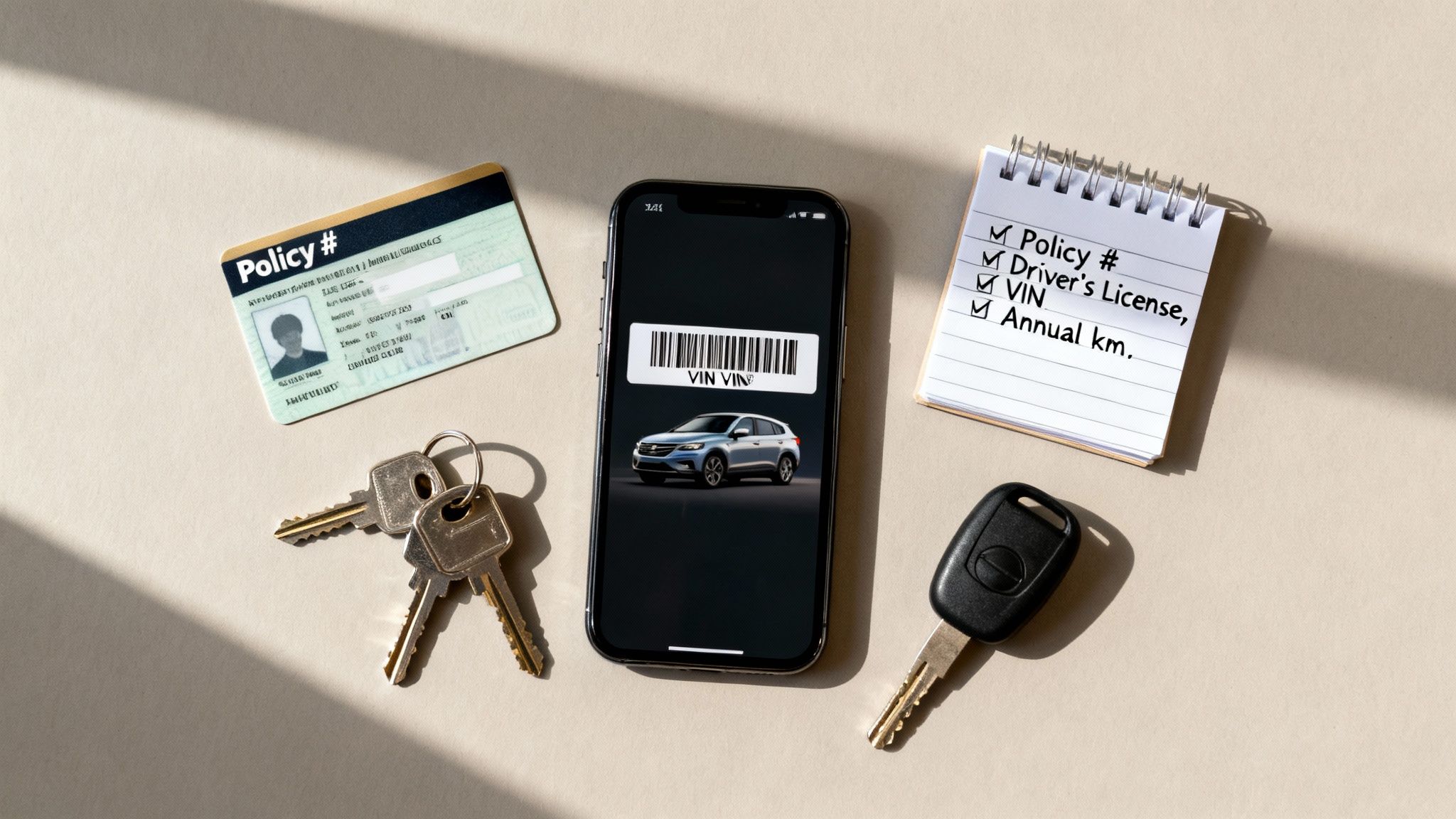
Preparation is your single best tool for saving money when you **renew auto insurance**. Before you begin getting quotes, having all your information organized puts you in control. This proactive approach ensures you get accurate quotes quickly and without frustrating delays.
Just a few minutes of prep work now can prevent a lot of back-and-forth communication later.
Your Essential Information Checklist
Having these details ready will streamline the shopping experience. Think of it as your renewal toolkit.
* **Your Current Policy:** Have your declarations page handy. It lists your policy number, current coverage limits, and deductibles—the perfect baseline for an apples-to-apples comparison with new quotes. * **Driver Details:** You’ll need the driver's licence number and date of birth for every person who will be listed on the policy. * **Vehicle Information:** The Vehicle Identification Number (VIN) for each car is essential. You can find it on your ownership document, on the driver's side of the dashboard, or inside the doorjamb. * **Driving History:** Be prepared with an honest estimate of your annual kilometres driven for each vehicle. You’ll also need to recall any tickets or accidents within the last **three to six years**.
This foundational information gets the process started, but the real opportunity for savings comes from evaluating what has changed in your life over the past year.
> The biggest mistake you can make at renewal is assuming nothing has changed. Your life isn't static, and your insurance policy shouldn't be either. Even small adjustments can lead to significant discounts.
How Life Changes Affect Your Premium
Your insurance premium is a reflection of your life at a specific moment. When that picture changes, your rate should, too. Ask yourself if any of these common life events apply to you:
* **You Moved:** A new postal code can dramatically alter your premium. Moving to a neighbourhood with lower crime rates or less traffic congestion often leads to savings. * **Your Commute Changed:** Did you start working from home or get a new job closer to your house? Driving fewer kilometres each year reduces your risk and should lower your cost. * **You Added a New Driver:** Bringing a new driver into the household, especially a young one, has a major impact. It’s crucial to get this right to ensure everyone is properly covered. For a deeper dive, check out our guide on [new driver insurance in Alberta](https://www.insuranceshope.ca/blog/new-driver-insurance-alberta-guide). * **Vehicle Updates:** Did you install winter tires? Many insurers in Alberta offer a discount for them. Have you added an approved anti-theft device? That’s another potential saving.
By taking stock of these changes, you’re not just renewing a policy—you’re updating it to match your current reality. This ensures you only pay for the risk you actually represent, which is the key to finding the most competitive rate.
Comparing Quotes The Right Way
Simply accepting your insurer's renewal offer without checking the market is one of the fastest ways to overpay. When that renewal package arrives, treat it as an opening offer, not your final bill. This is your cue to start shopping around and ensure you’re getting the best possible value when you **renew auto insurance**.
You have two main ways to approach this: you can contact insurance companies directly, one by one, or you can partner with an independent insurance broker. Each method has its own advantages, and understanding the difference is key to making a smart decision.
Going Direct vs. Using a Broker
Contacting individual insurance companies yourself seems straightforward. You can spend an afternoon visiting websites and making phone calls to collect quotes. The downside? This can be incredibly time-consuming, and you'll likely only reach out to major, well-known brands, potentially missing out on better rates from other excellent companies.
An independent insurance broker, on the other hand, works for *you*—not for any single insurance company. They have established relationships with a wide network of insurers, including specialty providers you might never find on your own. A good broker does all the heavy lifting for you, gathering multiple competitive quotes and presenting the best options for your specific situation.
> Think of a broker as your personal insurance shopper and expert advisor. They understand the market, know which companies offer the best rates for certain drivers, and can provide valuable advice that goes beyond a simple price comparison.
This expertise becomes particularly valuable when your insurance needs are more complex.
A Real-World Scenario: Adding a Teen Driver
Consider a common Alberta family situation: you need to add your 17-year-old son to your car insurance policy. If you go direct, you might get a few quotes that are shockingly high with little explanation. Some insurers might even be hesitant to offer you a policy at all, viewing a new teenage driver as too high-risk.
This is where a broker excels. They know which companies have the most competitive rates or offer special discounts for young drivers with good grades or a certificate from a recognized driving course. They can help structure the policy to be more cost-effective, such as assigning the new driver primarily to the family’s older, less expensive car. A broker can navigate these complexities to find a solution that provides proper coverage without the astronomical price tag—a huge advantage when you consider [why insurance rates can be high in Alberta](https://www.insuranceshope.ca/blog/why-insurance-rates-high-alberta) for everyone.
How to Make a True Apples-to-Apples Comparison
Getting the lowest price feels great, but not if the coverage is inadequate. A cheap policy with a high deductible or minimal liability limits could leave you in a serious financial bind after an accident. To perform a proper comparison, you must look beyond the premium.
When you have a few quotes in front of you, lay them out side-by-side and focus on these key details:
* **Liability Limits:** Ensure every quote has the same amount of third-party liability. The legal minimum in Alberta is **$200,000**, but **$1 million or $2 million** is the recommended standard for proper protection. * **Deductibles:** Compare the deductible amounts for collision and comprehensive. A lower premium might be hiding a much higher deductible that you’d have to pay out-of-pocket if you need to make a claim. * **Endorsements:** Look closely for any extra coverages, often called endorsements or riders. Does one quote include valuable protections like accident forgiveness or loss of use coverage while another doesn’t? These add-ons provide real value and should be part of your comparison.
By carefully comparing these details, you can be confident you’re choosing a policy that offers genuine value and protection, not just the cheapest price.
Actionable Strategies to Lower Your Premium
When your renewal notice arrives, your eyes probably jump straight to the total price. But here’s a crucial insight: that number isn’t set in stone. Renewing your auto insurance is the perfect opportunity to proactively find real savings.
It’s about more than just shopping around. A few smart adjustments to your policy and asking the right questions can unlock discounts you didn’t even know existed. Think of it as turning a routine expense into a chance to keep more of your hard-earned money.
Re-evaluating Your Deductibles
One of the most direct ways to lower your premium is by reviewing your deductibles for collision and comprehensive coverage. Your deductible is the amount you agree to pay out-of-pocket on a claim before your insurance company pays the rest.
The principle is simple: a higher deductible means you’re taking on more personal financial risk, and insurers reward this with a lower premium. For example, increasing your collision deductible from **$500 to $1,000** could easily save you **10-15%** on that portion of your premium. Of course, this is a calculated decision. If you have a healthy emergency fund and could comfortably cover the higher amount, this is one of the quickest ways to achieve immediate and ongoing savings.
The Power of Bundling and Discounts
Everyone has heard about bundling home and auto insurance. It’s a popular strategy for a reason—the multi-policy discount can often save you a significant percentage on both policies. However, it’s not *always* the cheapest option. Sometimes, two separate, highly competitive policies from different companies can still be more affordable than a bundled price.
This is where doing a little homework really pays off. To better understand the potential savings, check out our guide on [multiple policy discounts in Alberta insurance](https://www.insuranceshope.ca/blog/multiple-policy-discounts-alberta-insurance). Beyond bundling, a wide array of other discounts are available, but you often have to ask for them.
> Insurers won’t always automatically apply every discount you qualify for. It's important to be your own advocate and specifically ask your broker or provider what savings are available to you.
Uncovering Hidden Savings Opportunities
Many drivers in Alberta are eligible for discounts without even realizing it. These savings can be tied to your vehicle, your driving habits, and even your profession.
Don't leave money on the table. When you speak with your broker, make it a point to ask about these specific discount categories:
* **Vehicle Safety Features:** Does your car have an approved anti-theft device or alarm system? That directly lowers the risk of theft, which can reduce your comprehensive premium. * **Professional or Alumni Associations:** Many insurers have partnerships with professional organizations, alumni groups, or certain employers. Your membership could unlock a preferred group rate. * **Low Kilometre Usage:** If you’ve switched to working from home or have a very short commute, you may qualify for a low-mileage discount. Inform your broker about your new driving habits. * **Winter Tires:** This is a significant one in Alberta. Having four dedicated winter tires is a proven safety measure, and most insurers will offer a discount of around **5%** for them.
With so many variables at play, it’s worth having a dedicated conversation with your broker. Here’s a quick rundown of some of the most valuable discounts you can ask about.
Key Discounts to Ask Your Insurance Broker About
| Discount Category | Who Typically Qualifies | Potential Savings Range | | :--- | :--- | :--- | | **Multi-Policy (Bundling)** | Customers who insure their home/condo/tenant and auto with the same company. | **10-20%** on both policies | | **Winter Tires** | Drivers who install four matching winter tires during specified months. | **~5%** | | **Conviction-Free** | Drivers with a clean driving record (no tickets) for the past 3-5 years. | **5-15%** | | **Claims-Free** | Drivers who have not made an at-fault claim over a specific period (e.g., 6+ years). | **10-25%** | | **Anti-Theft System** | Vehicle owners with a factory-installed or approved aftermarket alarm/immobilizer. | **5-15%** on comprehensive | | **Group/Affinity** | Members of certain professional associations, alumni groups, or employees of partner companies. | **5-15%** | | **Low Kilometres** | Individuals who drive less than a set amount per year (e.g., under 10,000 km). | **5-10%** | | **New Vehicle** | Owners of a brand-new vehicle, typically within the first 1-3 model years. | **Up to 10%** |
By actively exploring these strategies, you shift from being a passive bill-payer to an engaged, informed consumer. That simple change in approach is the key to securing the most competitive rate and making sure your policy is working as hard for you as you do for your money.
Finalizing Your Renewal and Avoiding Common Pitfalls
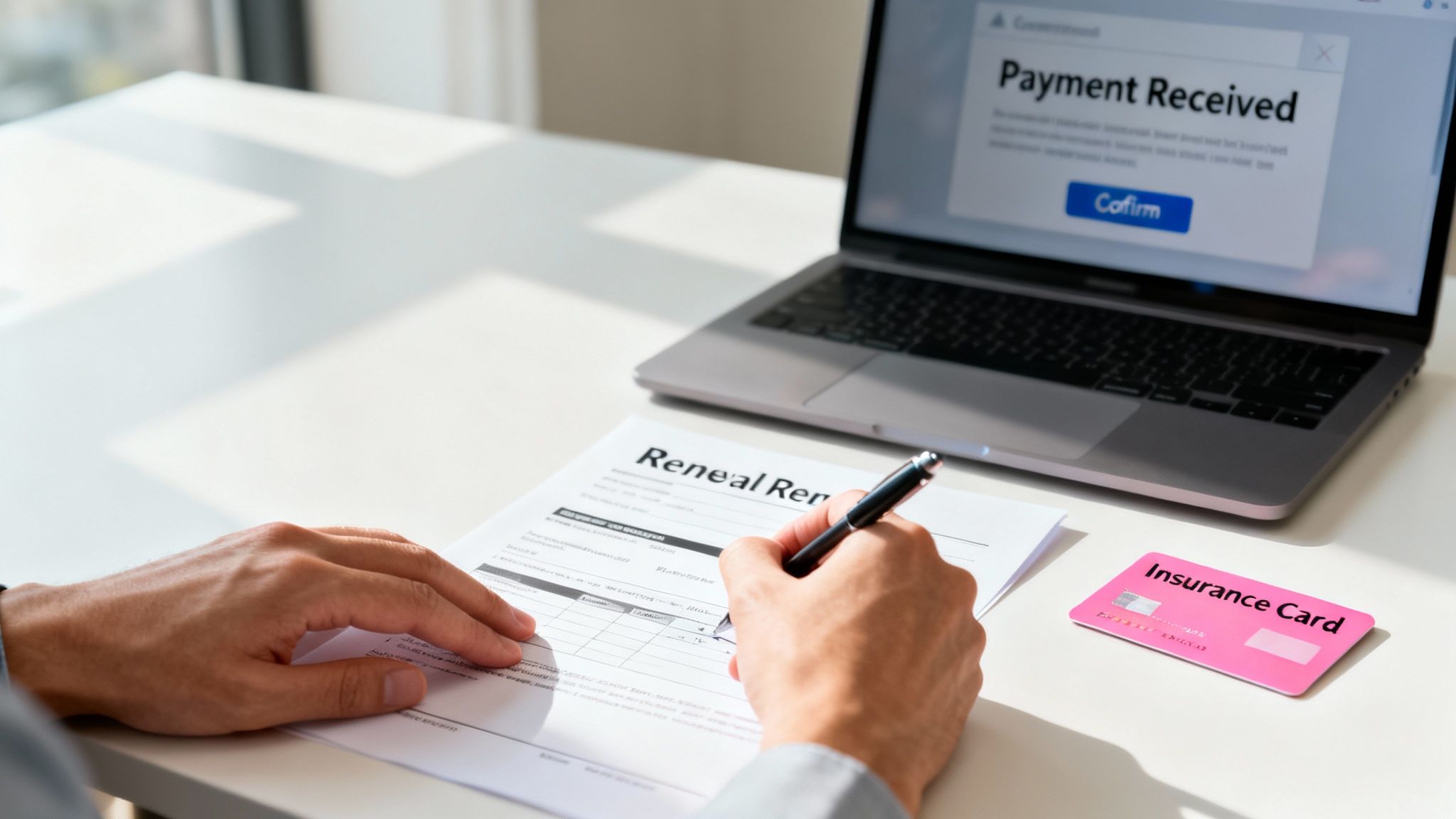
You’ve done the research, compared quotes, and selected a great new policy. Now it's time for the final, crucial steps. Getting these last details right ensures a seamless transition and prevents common mistakes that can cost you money or, worse, leave you accidentally uninsured.
Finalizing a new offer is usually straightforward—it might just be a quick digital signature or a verbal confirmation to your broker. The real key is what comes next, especially if you’re switching to a new insurance company.
Preventing Coverage Gaps and Double Payments
First and foremost: never assume your old policy will simply cancel itself. You must actively cancel it by contacting your previous insurer or broker. This is a non-negotiable step for two critical reasons.
First, you want to **avoid double payments**. If your old policy was set to auto-renew, you could easily be charged for coverage you no longer need. Second, you must **prevent a coverage gap**. Your new policy must begin on the **exact same day** your old one ends. In Alberta, even a single day without insurance can lead to serious legal and financial consequences.
A good broker will often handle the cancellation process for you, ensuring a perfectly smooth handover from your old provider to the new one.
> A classic pitfall is forgetting to cancel an old pre-authorized payment plan. Always get written confirmation that your previous policy has been terminated and that no further payments will be withdrawn from your account.
Your Final Document Check
When your new policy documents arrive, don't just file them away. Your new liability card (the "pink card") and the full policy wording are your proof of coverage. Take five minutes to perform one last review.
Think of this as your final opportunity to catch a small error before it becomes a major headache during a claim. Pull out the documents and quickly scan these key details:
* **Personal Information:** Are all names spelled correctly? Is your address current and accurate? * **Vehicle Details:** Double-check the VIN, year, make, and model for every car listed on the policy. A single incorrect digit can cause issues. * **Coverages and Deductibles:** Do the liability limits and deductible amounts for collision and comprehensive match the quote you agreed to?
Finding a mistake now is a simple phone call. Discovering one after an accident can be a nightmare.
Once you’re satisfied, place your new pink card in your vehicle's glove box right away and file the main policy contract in a safe place. That’s it—the process to **renew auto insurance** is complete, and you can drive with confidence, knowing you're properly protected at a competitive price.
--- Ready to make sure you have the best coverage at the right price? The licensed brokers in the **InsuranceShope** network can handle the shopping for you, providing expert advice and multiple quotes to help you save. Get your free, no-obligation quote today at [https://www.insuranceshope.ca](https://www.insuranceshope.ca).