Renters Insurance Covers What: Your Complete Guide to Protection
So, what does renters insurance *actually* cover? Think of it less like a complicated legal document and more like a powerful financial shield designed specifically for your life as a tenant. In short, it protects your stuff (**Personal Property**), covers your back if you're held responsible for an accident (**Personal Liability**), and even helps with temporary housing if you're forced out of your rental (**Additional Living Expenses**).
Understanding how these three pillars work together is the first step toward securing your financial well-being.
Your Financial Safety Net: What Renters Insurance Covers
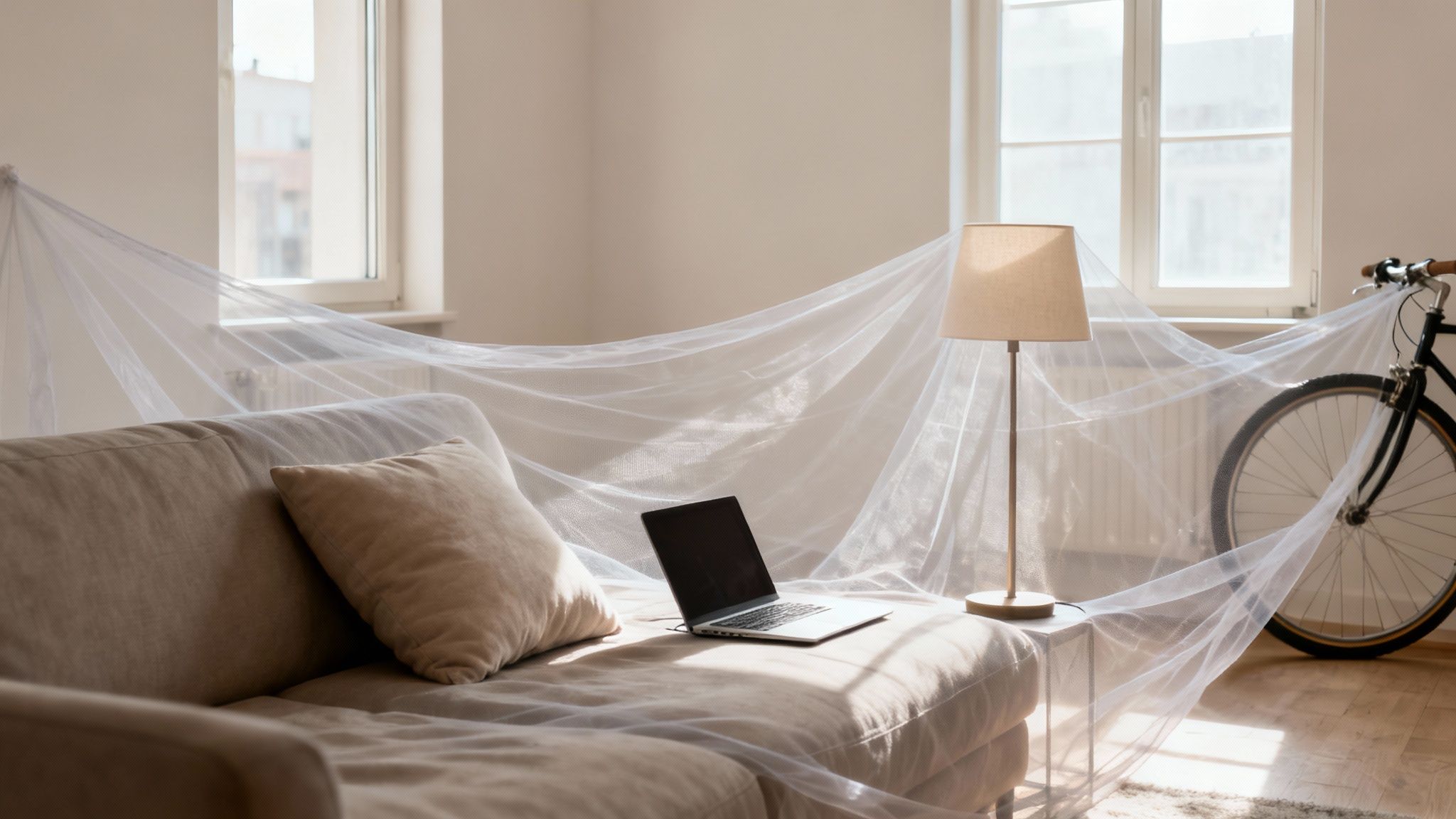
It’s one of the biggest—and most costly—misconceptions we see among tenants in Alberta: the belief that their landlord's insurance policy has them covered. Let’s clear that up right now. Your landlord's insurance is there to protect the building itself—the roof, the walls, the physical structure. It does absolutely nothing for your personal world *inside* those walls.
That’s where renters insurance steps in to fill a critical gap. Without it, you’d be on the hook for replacing everything you own after a fire or theft. A simple accident in your apartment could spiral into a lawsuit that puts your savings and future earnings on the line. Getting the right coverage isn't just a good idea; it's a smart financial decision that prevents a single bad day from becoming a long-term disaster.
The Three Pillars of Protection
At its heart, a standard renters insurance policy is built on three fundamental types of coverage. Getting a handle on these pillars is the key to understanding how your policy works for you and why it's such an incredible value.
* **Personal Property Coverage:** This is the part that protects all your belongings. From your couch and laptop to your clothes and kitchen gadgets, this coverage helps you repair or replace your things if they’re stolen or damaged by a covered event, like a fire or a burst pipe.
* **Personal Liability Coverage:** This is your essential financial shield. It protects you if you're found legally responsible for injuring someone or damaging their property. Say a guest slips and falls in your unit, or your bathtub overflows and causes a major leak in the apartment below—this coverage helps pay for legal defence costs and any potential settlements, saving you from financial ruin.
* **Additional Living Expenses (ALE):** If a covered disaster, like a fire, makes your rental uninhabitable, ALE coverage is your lifeline. It helps pay for necessary and reasonable costs like hotel bills, a temporary rental, and even the extra cost of meals while your home is being repaired.
To make it even clearer, here’s a quick summary of how these three pillars work together.
A Quick Look at Your Renters Insurance Shield
| Coverage Type | What It Protects | Example Scenario | | :--- | :--- | :--- | | **Personal Property** | Your belongings (furniture, electronics, clothes, etc.) from theft or damage. | A kitchen fire damages your cabinets and appliances. This helps replace them. | | **Personal Liability** | Your finances from lawsuits if you accidentally injure someone or damage their property. | A guest trips over a rug in your living room and breaks their arm, leading to a lawsuit. | | **Additional Living Expenses** | The cost of temporary housing and related expenses if your rental becomes unlivable. | A major water leak forces you to move into a hotel for two weeks while repairs are done. |
This core structure of property, liability, and living expenses is quite similar to the foundation you’d find when exploring [home insurance coverage](https://www.insuranceshope.ca/blog/understanding-home-insurance-coverage), but it's built specifically for the needs of tenants. By covering these three key areas, renters insurance delivers powerful protection for a surprisingly low cost, ensuring a single bad day doesn't turn into a financial catastrophe.
Now, let's dive deeper into each of these protections.
Protecting Your Possessions with Personal Property Coverage
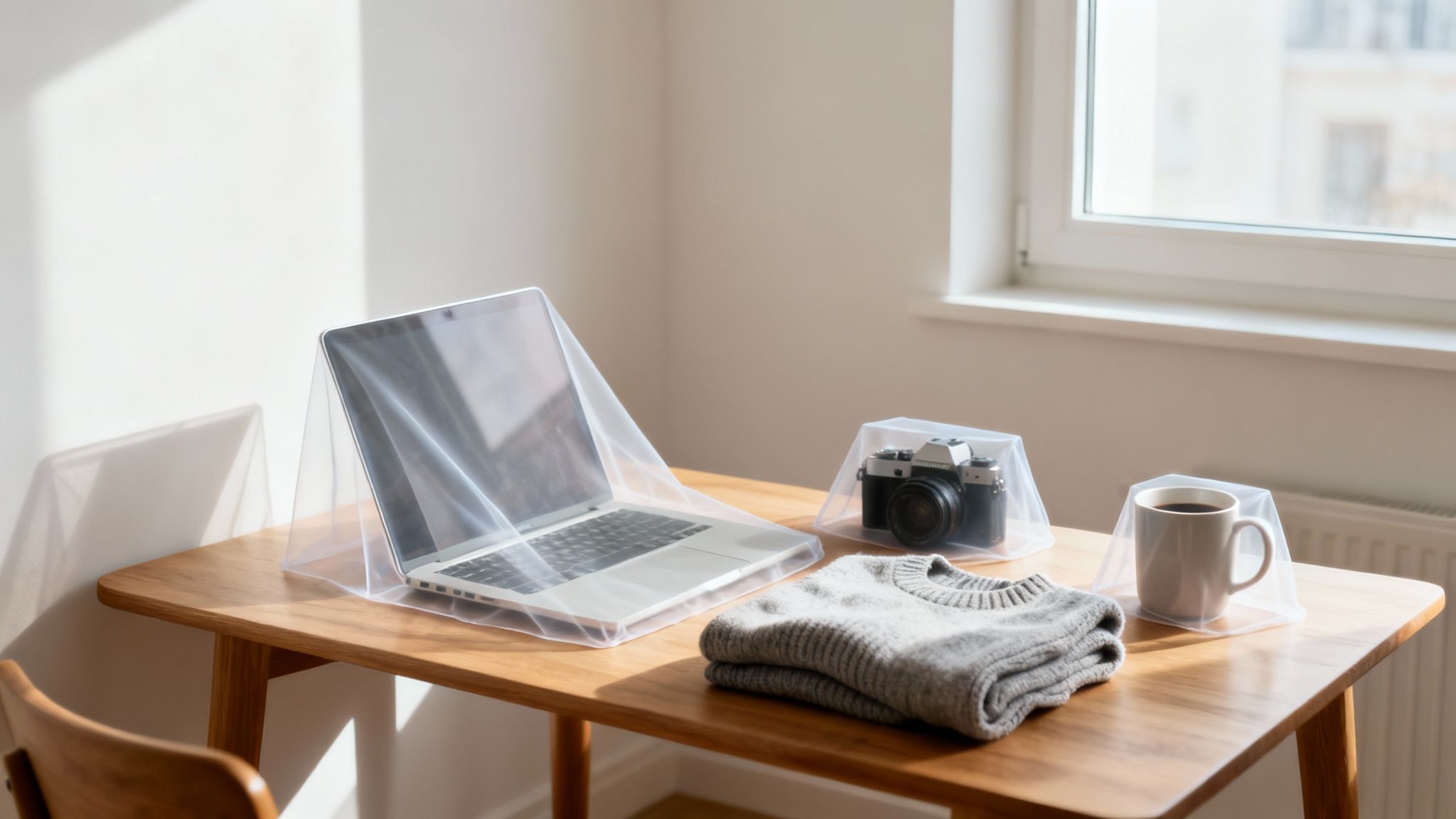
When people ask, "what does renters insurance cover?" their first thought usually lands on their stuff. And they're right. **Personal Property Coverage** is the absolute heart of your policy, designed to protect everything you own inside your rented home.
But its true value is often overlooked until the day you really, really need it. This isn't just about your big-ticket items; it’s a financial safety net for the entire life you've built—from the sofa you relax on and the laptop you work from, to the clothes in your closet and the dishes in your kitchen. If disaster strikes, this is the part of your policy that helps you replace what you lost and get back on your feet without wiping out your savings.
What Events Are Typically Covered?
Your policy document will list specific "named perils"—these are the types of disasters it protects your belongings from. While the details can vary a bit between providers, most standard renters insurance plans in Alberta cover a very similar set of common risks.
This simply means that if your things are damaged or destroyed by one of these listed events, your insurance is there to help you recover financially.
Some of the most common covered perils include:
* **Fire and smoke:** This is a big one. It covers damage from the flames themselves and the smoke that goes with them. * **Theft:** If your apartment is broken into and your TV, jewellery, or other valuables are stolen, this coverage kicks in to help cover the loss. * **Vandalism:** Protects you from intentional damage to your property. * **Certain types of water damage:** This usually refers to sudden and accidental mishaps, like a pipe bursting or your washing machine overflowing. (Just note, it typically doesn't cover overland flooding from a nearby river). * **Falling objects:** If a heavy branch from a neighbour's tree crashes through your window and smashes your dining table, this would generally be covered.
Getting familiar with these covered events is the first step to seeing how your policy acts as a practical shield. For a complete look at what goes into a policy, you can explore this detailed **[tenant insurance guide for Alberta renters](https://www.insuranceshope.ca/blog/tenant-insurance-guide-alberta-renters)**.
Replacement Cost vs. Actual Cash Value
When it’s time to make a claim, how your insurance company calculates your payout is one of the most critical details in your entire policy. There are two main ways they do this: **Actual Cash Value (ACV)** and **Replacement Cost Value (RCV)**. The difference is huge and directly impacts your ability to recover.
Let's use a real-world example. Imagine your five-year-old laptop, which you originally bought for **$1,500**, gets destroyed in a kitchen fire.
* **Actual Cash Value (ACV):** An ACV policy would pay you for what that laptop is worth *today*, factoring in five years of depreciation. Think of it like a car's trade-in value. You might only get **$400**, which isn't going to be enough to buy a comparable new model.
* **Replacement Cost Value (RCV):** This is the superior option for nearly everyone. An RCV policy gives you enough money to buy a *brand-new laptop* of similar quality, minus your deductible. You'd get the funds needed to actually go to the store and replace what you lost.
> **Expert Tip:** While a Replacement Cost policy costs a little more in premiums, it delivers far better financial protection when you need it most. It ensures you can truly replace your belongings without having to raid your savings, making it the clear choice for most renters.
Special Limits for High-Value Items
Here’s something crucial to know: most renters policies have "special limits" on certain categories of expensive items. This means even if your total personal property limit is **$30,000**, the maximum payout for specific types of items will be capped at a much lower amount.
Common categories with special limits often include:
* Jewellery and watches * Bicycles * Fine art and collectibles * High-end cameras or computer gear
If your collection of watches or your professional-grade camera equipment is worth more than these sub-limits, you could be seriously underinsured. The solution is to add an endorsement or "rider" to your policy. This lets you "schedule" those specific items for their full appraised value, ensuring your most prized possessions are properly protected.
Understanding Your Personal Liability Shield

While we all worry about our stuff, protecting your possessions often isn't the biggest financial risk you face as a tenant. The real unsung hero of your renters insurance policy is the **Personal Liability** coverage. It's designed to safeguard something far more valuable than your TV or sofa: your entire financial future.
Many renters gloss over this part of the policy, but it’s arguably the most critical component. This coverage has nothing to do with replacing your belongings. Instead, it protects you from the potentially crushing costs of a lawsuit if you’re found legally responsible for injuring someone or damaging their property.
This is exactly why most landlords in Alberta now insist on tenants having renters insurance. They aren't worried about your laptop; they want to make sure a tenant’s accidental mistake doesn't cause massive damage to their building or spark a lawsuit involving other residents—for which you could be on the hook.
How Liability Coverage Works in The Real World
Liability protection can feel a bit abstract, so let's bring it down to earth with some real-world scenarios that can happen to anyone. Think of it as a financial safety net for those accidents you never see coming.
Imagine you're having a few friends over. One of them doesn't spot a spill on the kitchen floor, slips, and fractures their wrist. Suddenly, they're facing medical bills and lost income from being unable to work. They could decide to sue you to cover those losses. Without insurance, you'd be paying for a legal defence and any settlement right out of your own pocket.
Another classic example is water damage. You accidentally leave the bathtub faucet running, causing a major overflow that seeps through the floor. Now, the ceiling, walls, and belongings of the tenant below you are ruined. Repair bills can easily skyrocket into the tens of thousands of dollars. Your liability coverage is built for these exact situations.
> Liability insurance steps in when an everyday mistake threatens to become a financial catastrophe. It covers legal fees, medical bills for injured parties, and settlement costs up to your policy limit, protecting your savings and future income from being drained by a single accident.
What Does Personal Liability Typically Cover?
To really appreciate what renters insurance covers liability-wise, it helps to break down the specific protections it offers. While policies can vary a bit, most provide coverage for two main types of incidents.
1. **Bodily Injury:** This covers the costs if you're found responsible for physically injuring someone. This could happen in your apartment (like the slip-and-fall example) or even when you're not at home. For instance, if your dog gets a little too excited at an off-leash park and accidentally injures someone, your liability coverage could extend to that incident.
2. **Property Damage:** This kicks in when you're held responsible for damaging someone else's property. The overflowing bathtub is a perfect example, but it could also be something as simple as accidentally breaking a neighbour's window while playing catch in the backyard.
Your Legal Defence Team on Standby
A huge benefit of liability insurance is that it doesn’t just pay for settlements—it also covers the cost of your legal defence. Even if a lawsuit against you is completely baseless, the legal fees to prove your innocence can be financially crippling.
Your insurance company has a duty to defend you against any covered claim. This means they will hire and pay for a lawyer to represent you, manage the entire legal process, and guide you through what can be an incredibly stressful and confusing time. This defence is provided whether you win or lose the case, right up until the policy limit is reached for a settlement. This protection alone makes liability coverage an essential part of your financial plan.
Covering Costs When Your Home Is Unlivable
We've talked about how renters insurance has your back when it comes to your belongings and liability. But what if the worst happens? A serious fire or a massive pipe burst makes your apartment completely unlivable. Where are you supposed to go? And who foots the bill?
This is exactly where the third pillar of your policy, **Additional Living Expenses (ALE)**, proves to be an absolute lifeline. It’s designed to give you financial stability right when you need it most, ensuring you have a safe place to stay without having to burn through your savings while your home is being repaired.
ALE isn't about getting a free lifestyle upgrade; it's about maintaining the one you already have. It covers the *increase* in your regular living costs after you've been forced out of your home.
A Real-World Displacement Scenario
Imagine a fire breaks out in the apartment next door. While the flames don't reach your unit, it suffers heavy smoke and water damage from the firefighting efforts. Your landlord tells you repairs will take at least a month and it’s not safe to stay there.
Suddenly, you're hit with a long list of urgent and expensive problems. You need to find a hotel, eat out for every meal, and maybe even find a place to board your pet. This is precisely the moment you’d file an ALE claim.
> **Additional Living Expenses** coverage is your policy’s promise that you won't be left stranded. It ensures that a disaster that damages your rental doesn't also derail your finances by covering the necessary and reasonable extra costs you incur to maintain your normal standard of living.
What Does ALE Actually Pay For?
Your ALE coverage is built to handle a range of temporary costs that pop up when you're displaced—expenses that go far beyond your usual budget. While every policy has its own specific limits, this coverage typically helps with things like:
* **Temporary Accommodation:** This could be the bill for a hotel room, a motel, or a short-term furnished apartment while your place is uninhabitable. * **Increased Meal Costs:** If your temporary spot doesn't have a kitchen, forcing you to eat at restaurants, ALE can cover the difference between that and your normal grocery spending. * **Moving and Storage:** You might need to move your undamaged belongings into a storage unit to keep them safe during repairs. ALE can cover the cost of the movers and the storage locker rental. * **Extra Transportation:** If your temporary home is further from work or your kids' school, the added cost of your commute could be covered. * **Other Essential Services:** This can even include things like laundry services if you don't have access to a washer and dryer.
It's crucial to remember that ALE has limits. These are often calculated as a percentage of your personal property coverage—for example, **20%** of a **$30,000** policy would give you **$6,000** in ALE. This coverage is also separate from specific perils like overland flooding. For a deeper dive into that particular risk, our guide to **[overland flood insurance for Alberta homeowners](https://www.insuranceshope.ca/blog/overland-flood-insurance-alberta-homeowners)** has some valuable insights.
By understanding what renters insurance covers when you're displaced, you can see how it provides a complete safety net, protecting not just your stuff, but your stability and peace of mind.
What Renters Insurance Usually Doesn't Cover
Knowing what your renters insurance covers is a great start, but understanding what it *doesn't* cover is just as important. No one wants to be caught off guard during a claim, and your policy is designed to handle specific, unexpected accidents—not every possible problem that can crop up.
Think of it this way: your policy has boundaries. Knowing where those lines are drawn helps you set the right expectations from day one and identify any gaps you might need to fill. Let's walk through the major things that a standard Alberta renters insurance policy typically leaves out.
High-Risk and Widespread Events
Some events are just too big, too widespread, or too predictable for a standard, affordable policy to cover. Insurers often separate these major risks so that someone living in a low-risk area isn't paying extra to cover something that's unlikely to affect them.
Here are the big ones you need to know about:
* **Overland Flooding:** This is when water from outside—think overflowing rivers, lakes, or even extreme rainfall—seeps into your ground-floor or basement apartment. Because a single flood can affect an entire neighbourhood, causing massive, simultaneous claims, it's excluded from basic plans. This is completely different from a covered issue like a pipe bursting inside your unit.
* **Earthquakes:** Much like flooding, damage from earth tremors is considered a catastrophic event that’s geographically specific. Standard policies don't include it. If you happen to live in an area with seismic activity, you'll need to buy this protection as a separate add-on.
* **Sewer Backup:** If the city's sewer system gets overwhelmed and water backs up into your home through the drains, the cleanup and damage aren't covered by a standard policy. This is another one of those high-impact events that requires its own special endorsement.
Maintenance, Wear, and Tear
Your renters policy is there for the sudden and accidental stuff. It’s not meant to cover problems that come from a lack of maintenance or things just getting old and wearing out. The upkeep of the building itself is your landlord’s job, and that's a key distinction. For more on your landlord's responsibilities, our guide on **[insurance for a rental property](https://www.insuranceshope.ca/blog/insurance-for-a-rental-property)** is a great resource.
> **The Bottom Line:** Renters insurance is for sudden, accidental losses—not for gradual damage or problems that could have been avoided with regular upkeep. That's a core principle of how insurance is designed to work.
Here are a few maintenance-related issues that fall outside a typical policy:
* **Pest Infestations:** Damage from critters like bedbugs, termites, or mice is seen as a maintenance problem, not an insurable accident. The costs for extermination and replacing anything they've ruined won't be covered.
* **Mould Damage:** This can be tricky. If mould grows because of a covered event (like the water used to put out a fire), it might be covered. But if it develops slowly over time because of high humidity or a slow, hidden leak, it’s generally considered a maintenance issue and is excluded.
* **Intentional Damage:** This one’s pretty straightforward. Your policy will never cover damage that you or someone in your household causes on purpose.
Learning about these exclusions isn't meant to make you nervous. It's about empowering you. When you understand the limits of your standard coverage, you can have a much smarter conversation with your broker. You can pinpoint the unique risks you face and make sure your financial safety net is solid, with no unpleasant surprises.
Tailoring Your Coverage with Optional Add-Ons
Your standard renters insurance policy gives you a fantastic foundation of protection, but let's be honest—your life and possessions are unique. Just like you’d add winter tires or a sunroof to a new car, you can add specialized protection to your insurance policy. These optional add-ons, known as **endorsements** or **riders**, are designed to close specific coverage gaps and build a plan that fits your life perfectly.
Think of your basic policy as a great combo meal at a restaurant—it covers all the essentials beautifully. Endorsements are the à la carte items, letting you add exactly what you need without paying for things you don’t. This is a critical step in making sure your renters insurance truly covers what matters most to you.
Filling Gaps for Specific Risks
As we covered earlier, standard policies have to draw a line somewhere, which means certain widespread or high-risk events are usually excluded. If you live in an area prone to these issues, you simply can't afford to ignore them. Thankfully, endorsements are the solution.
Common risk-based add-ons in Alberta include:
* **Overland Water Coverage:** This is an absolute must-have for tenants in ground-floor or basement suites. It protects your belongings from damage caused by water seeping into your unit from outside sources, like heavy rainfall or a thawing snowpack—a risk that is specifically left out of standard plans. * **Sewer Backup Coverage:** A sewer backup isn't just damaging; it's a messy, unsanitary nightmare. This endorsement covers the extensive cleanup and replacement costs if wastewater from municipal lines backs up into your home through toilets or drains. * **Earthquake Coverage:** While major earthquakes are rare in Alberta, tremors can and do happen. If you live in a region with known seismic activity, this rider ensures you’re protected from damage caused by shifting ground.
Protecting Your High-Value Possessions
One of the most common reasons renters find themselves underinsured after a claim is because they weren't aware of the special limits on high-value items. Your **$30,000** personal property limit doesn't mean your insurer will write a cheque for **$30,000** for any single stolen item. In fact, a basic policy might cap the payout for *all* of your jewellery combined at just **$1,500**.
> An endorsement, often called a "floater," lets you schedule individual high-value items for their full appraised value. This simple addition removes the standard policy sub-limit for that specific item, guaranteeing you can replace it if it's lost, damaged, or stolen.
You should seriously consider adding a floater if you own:
* **Expensive Jewellery:** Engagement rings, luxury watches, or family heirlooms. * **High-End Electronics:** Professional camera gear, custom-built computers, or premium audio systems. * **Fine Art and Collectibles:** Paintings, sculptures, signed memorabilia, or any rare collection that exceeds standard limits. * **Musical Instruments:** That professional-grade guitar, violin, or digital piano. * **Sporting Goods:** High-end road bikes, skis, or specialized athletic equipment.
These principles of customizing your coverage aren't just for renters. As you can learn in our **[complete guide to condo insurance in Alberta](https://www.insuranceshope.ca/blog/condo-insurance-alberta-guide)**, condo owners also use endorsements to protect their unique investments and belongings. By taking a careful inventory of your possessions and considering your location-specific risks, you can work with a broker to build a safety net that's truly made for you.
Frequently Asked Questions About Renters Insurance
Even after you've got the basics down, a few practical questions always pop up. We've gathered some of the most common ones we hear from tenants right here in Alberta to give you clear, straightforward answers.
Is My Roommate Covered By My Policy?
This is a huge point of confusion for a lot of renters, and the answer is almost always **no**. A standard renters insurance policy is designed to cover you, your legal spouse, and any dependents living under your roof. Your roommate is considered a totally separate person in the eyes of the insurer and needs to get their own policy to protect their stuff and their liability.
Trying to share a policy is a bad idea. If you ever needed to file a claim, the insurance cheque would be made out to both of you, which can get messy fast. The cleanest, safest, and most professional approach is for each tenant to have their own individual coverage.
How Do I Create A Home Inventory?
A home inventory is your single best friend when it comes to making a claim. It’s the proof you need to show what you owned and what it was worth. The easiest way to get it done is with the phone you already have in your pocket.
* **Take a video tour:** Just walk through your place, room by room, and narrate what you see. Don't forget to open up closets, cabinets, and drawers to show what's inside. * **Snap photos of big-ticket items:** For more expensive things like your TV, laptop, jewellery, or that piece of art you love, take individual photos. Get a clear shot of any serial numbers or unique details. * **Digitize your receipts:** Keep digital copies of receipts for your major purchases. A quick photo or a saved PDF is perfect. * **Store it all in the cloud:** This is the most important step. Save your video, photos, and receipts to a cloud service like Google Drive or Dropbox. That way, even if your phone and computer are destroyed in a fire, your proof is safe and sound somewhere else.
Does My Landlord's Insurance Cover Me?
Absolutely not. If there's one thing you take away from this guide, let it be this: your landlord's insurance does not protect you or your belongings in any way.
The landlord's policy is there to protect *their* financial investment—the building itself. It covers the walls, the roof, the plumbing, and the structure. It provides **zero coverage** for your personal property if it’s stolen or ruined in a fire. It also won't help you one bit if someone sues you for liability. Renters insurance was created specifically to fill this massive gap and protect your financial well-being.
--- Ready to protect your world? The expert brokers in the **InsuranceShope** network can help you find a renters insurance policy that fits your life and budget. They shop multiple providers to find you the best value, ensuring you have the right protection without overpaying. Get your free, no-obligation quote today and gain true peace of mind.
[Get Your Free Alberta Renters Insurance Quote at InsuranceShope](https://www.insuranceshope.ca)